
Dr. Shwetha Jain is highly experienced and has performed over 10000+ Phaco and MICS cataract surgery procedures in Bangalore

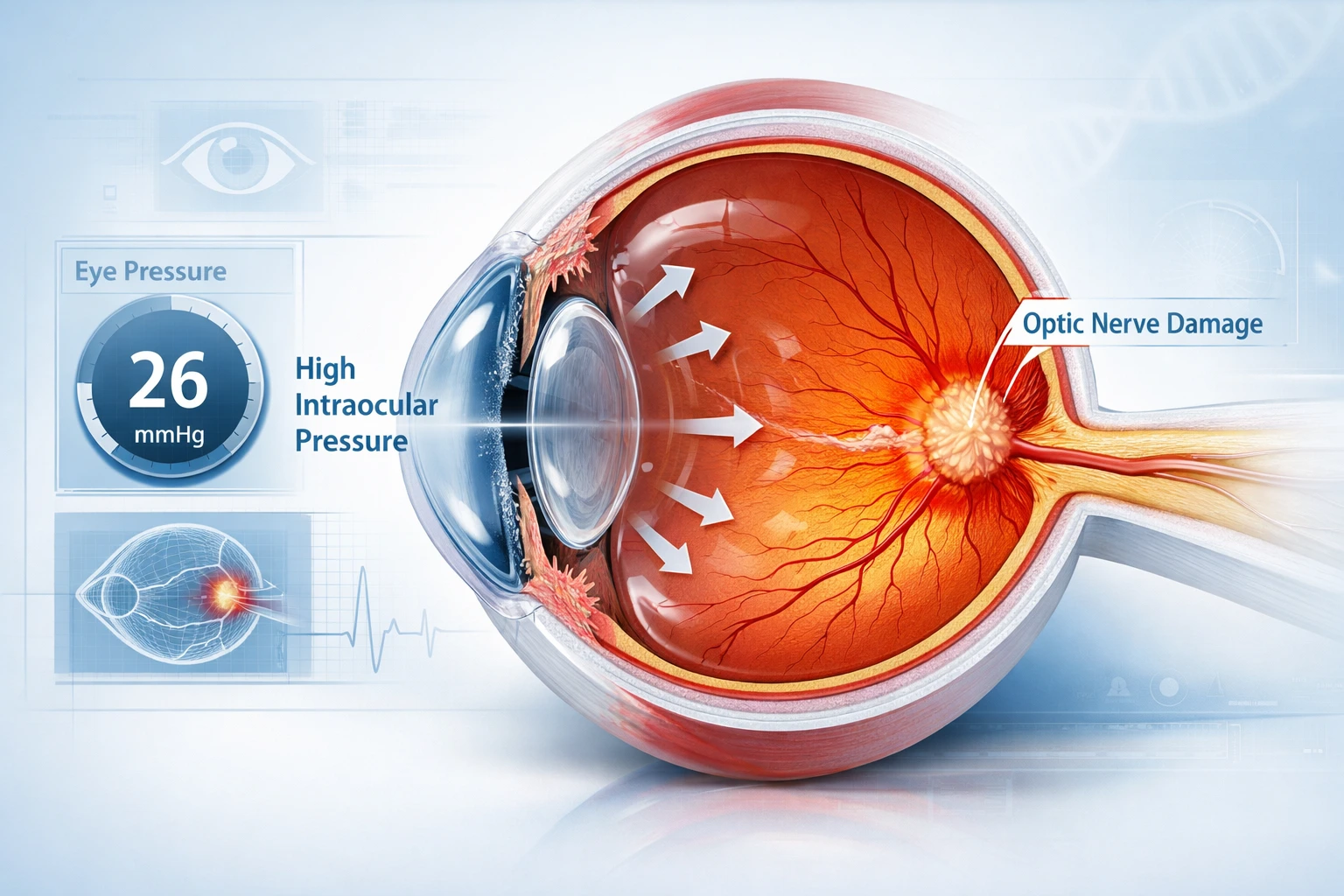
Glaucoma damages the optic nerve when eye pressure increases, which can lead to gradual vision loss.
Glaucoma is a group of eye diseases that damage the optic nerve, the structure responsible for transmitting visual information from the eye to the brain. It is one of the leading causes of irreversible vision loss worldwide.
The condition is often associated with increased intraocular pressure (eye pressure) that gradually damages the optic nerve. Because glaucoma frequently develops without noticeable symptoms in its early stages, it is commonly referred to as the “silent thief of sight.”
At Samyak Drishti Eye Hospital in South Bangalore, glaucoma is diagnosed through advanced diagnostic testing and managed with treatments such as laser iridotomy, trabeculectomy surgery, and glaucoma drainage shunt procedures depending on the severity of the disease.
Early detection and timely treatment are essential to prevent permanent vision loss.
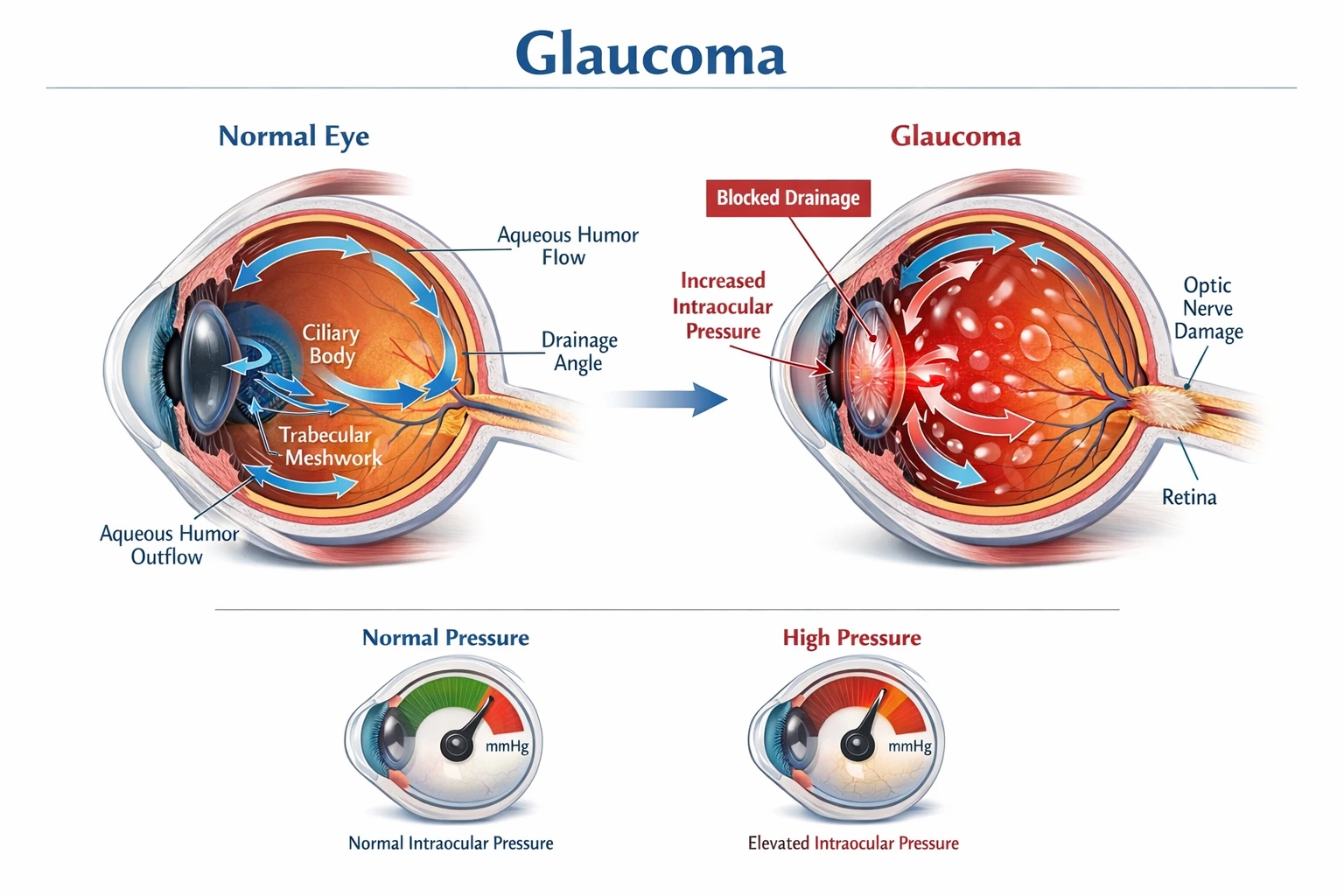
Glaucoma occurs when increased eye pressure damages the optic nerve.
Glaucoma is an eye condition that causes progressive damage to the optic nerve, usually due to increased pressure inside the eye.
Inside the eye, a clear fluid called aqueous humor continuously circulates to maintain normal eye pressure. When this fluid does not drain properly, pressure inside the eye may increase.
Over time, elevated eye pressure can damage the optic nerve fibers, leading to gradual loss of peripheral vision.
If glaucoma is left untreated, the damage can progress and may eventually result in severe vision loss.
There are several types of glaucoma, but the most common forms include the following.
Open-angle glaucoma is the most common type of glaucoma. It develops slowly when the eye’s drainage system becomes less efficient over time.
Because symptoms develop gradually, many patients do not notice vision loss until the disease has progressed significantly.
Angle-closure glaucoma occurs when the drainage angle inside the eye becomes blocked, causing a sudden rise in eye pressure.
This form of glaucoma may cause symptoms such as:
Angle-closure glaucoma requires prompt treatment to prevent permanent vision damage.
In many cases, glaucoma does not cause noticeable symptoms in its early stages.
As the disease progresses, symptoms may include:
Because symptoms may appear only in advanced stages, regular eye examinations are the most reliable way to detect glaucoma early.
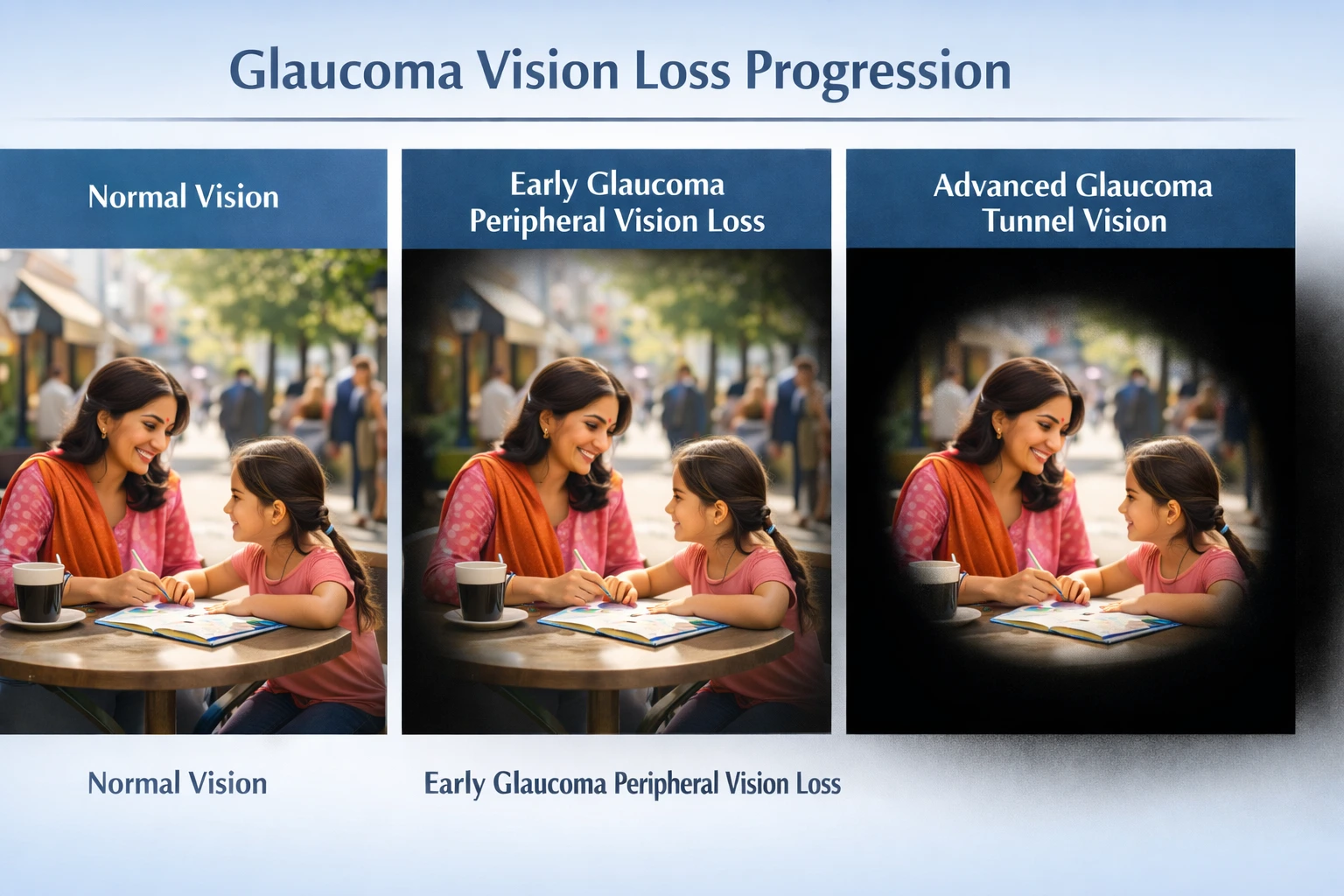
Glaucoma gradually damages peripheral vision and may lead to tunnel vision if untreated.
Glaucoma typically affects peripheral vision first, while central vision may remain normal for a long time.
In the early stages, vision loss is often subtle and difficult to notice. As the disease progresses, the visual field becomes narrower.
In advanced stages, patients may experience tunnel vision, where only central vision remains.
Once vision loss occurs due to glaucoma, it cannot be reversed, which is why early detection and treatment are critical.
Certain individuals have a higher risk of developing glaucoma.
Common risk factors include:
People with these risk factors should undergo regular glaucoma screening to detect the disease early.
Diagnosing glaucoma requires a detailed eye examination and specialized tests.
At Samyak Drishti Eye Hospital, glaucoma evaluation may include:
These tests help doctors evaluate optic nerve health and detect early signs of glaucoma damage.
Glaucoma treatment focuses on reducing eye pressure to prevent further damage to the optic nerve.
Depending on the severity of the disease, treatment may include medications, laser procedures, or surgery.
Laser iridotomy is a laser procedure commonly used to treat angle-closure glaucoma.
During this procedure, a small opening is created in the iris using a laser. This opening improves the flow of fluid inside the eye and helps reduce eye pressure.
Laser iridotomy is usually performed as a quick outpatient procedure.
Trabeculectomy is a surgical procedure used when glaucoma cannot be adequately controlled with medications or laser treatment.
In this procedure, the surgeon creates a new drainage pathway that allows fluid to leave the eye more effectively, thereby lowering eye pressure.
Trabeculectomy is one of the most commonly performed glaucoma filtration surgeries.
Glaucoma drainage shunts, also called tube shunts or drainage implants, are used in certain advanced cases of glaucoma.
The procedure involves placing a small tube in the eye to help drain excess fluid and reduce eye pressure.
This treatment is often recommended when other glaucoma surgeries have not achieved adequate pressure control.
At Samyak Drishti Eye Hospital in South Bangalore, glaucoma care focuses on early detection, accurate diagnosis, and personalized treatment.
Our glaucoma services include:
Our goal is to control eye pressure, protect the optic nerve, and preserve long-term vision.
Glaucoma damage is permanent and irreversible, but early detection can help slow the progression of the disease.
Regular eye examinations allow doctors to detect glaucoma before significant vision loss occurs.
With timely treatment and monitoring, many patients are able to maintain stable vision for many years.
Glaucoma management requires careful monitoring, accurate diagnosis, and specialized treatment to prevent progressive vision loss. At Samyak Drishti Eye Hospital in South Bangalore, glaucoma care is provided by experienced eye specialists trained in diagnosing and treating different types of glaucoma.
Our specialists perform detailed evaluations including optic nerve assessment, visual field testing, and intraocular pressure measurement to determine the severity of glaucoma and recommend the most appropriate treatment plan.
Depending on the patient’s condition, treatment may include laser iridotomy, trabeculectomy surgery, or glaucoma drainage shunt procedures to control eye pressure and protect the optic nerve.
Patients receive personalized care and long-term monitoring to ensure the best possible outcomes in preserving vision.

MBBS, MS (CMC- Vellore) DNB, FELLOWSHIP IN GLAUCOMA (Minto eye hospital)
Dr. Shwetha Jain is a refractive surgery specialist with expertise in LASIK and SMILE procedures for correcting myopia, hyperopia, and astigmatism. The doctor performs comprehensive eye assessments to ensure safe and precise laser vision correction.
Glaucoma cannot be completely cured, but treatment can help control eye pressure and slow the progression of the disease.
No. Some patients develop glaucoma even with normal eye pressure, a condition known as normal-tension glaucoma.
Patients with glaucoma usually require regular follow-up visits to monitor eye pressure and optic nerve health.
If glaucoma is left untreated, it can lead to severe vision loss or blindness. Early diagnosis and treatment significantly reduce this risk.
Yes. A family history of glaucoma increases the risk of developing the condition, which is why regular screening is recommended for family members.
Early detection is the most effective way to prevent vision loss caused by glaucoma.
If you have risk factors for glaucoma or have not had an eye examination recently, schedule a glaucoma screening at Samyak Drishti Eye Hospital.