Dr. Shwetha Jain is highly experienced and has performed over 10000+ Phaco and MICS cataract surgery procedures in Bangalore
A comprehensive eye examination is a complete evaluation of vision and eye health performed by an ophthalmologist or trained optometrist. Unlike a basic vision test that only checks glasses power, a comprehensive eye exam assesses multiple aspects of the eyes to detect vision problems and early signs of eye diseases.
At Samyak Drishti Eye Hospital in South Bangalore, comprehensive eye examinations help diagnose conditions such as refractive errors, cataracts, glaucoma, retinal disorders, and other eye health issues before they affect vision.
Regular eye examinations play an important role in maintaining clear vision and protecting long-term eye health.
A comprehensive eye examination is a detailed medical evaluation of the eyes and visual system. It includes several diagnostic tests that assess:
This examination helps identify common vision problems such as myopia, hyperopia, and astigmatism, as well as detect early signs of eye diseases.
Unlike a simple eye chart test, a comprehensive eye exam provides a complete understanding of eye health and visual function.
Regular eye examinations help detect vision problems and eye diseases early, often before symptoms become noticeable.
Benefits of routine eye exams include:
Many serious eye conditions develop without noticeable symptoms in early stages, which is why periodic eye examinations are recommended for people of all age groups.
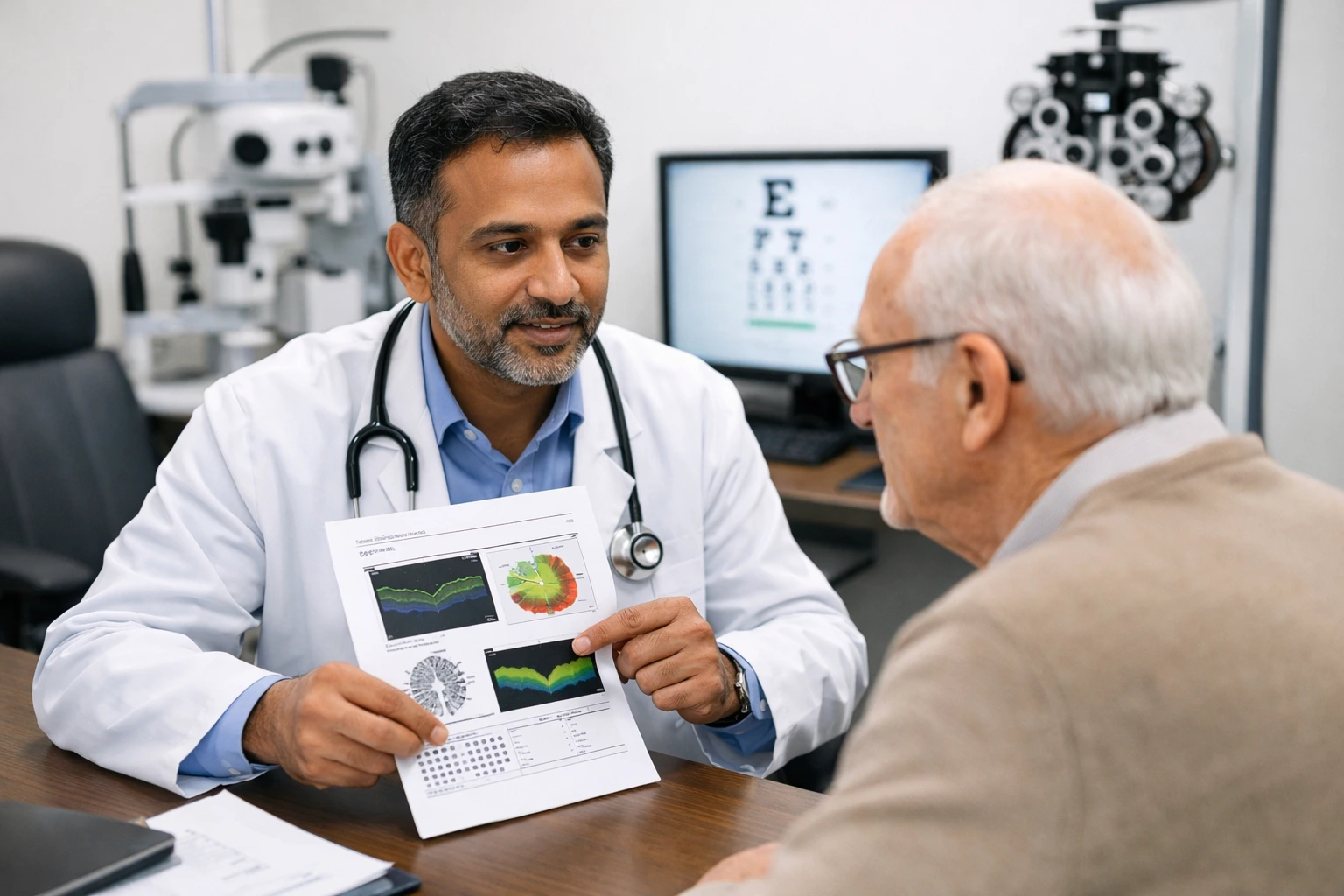
Regular eye examinations help detect vision problems and eye diseases early.
A comprehensive eye exam includes several diagnostic procedures that evaluate different aspects of vision and eye health.
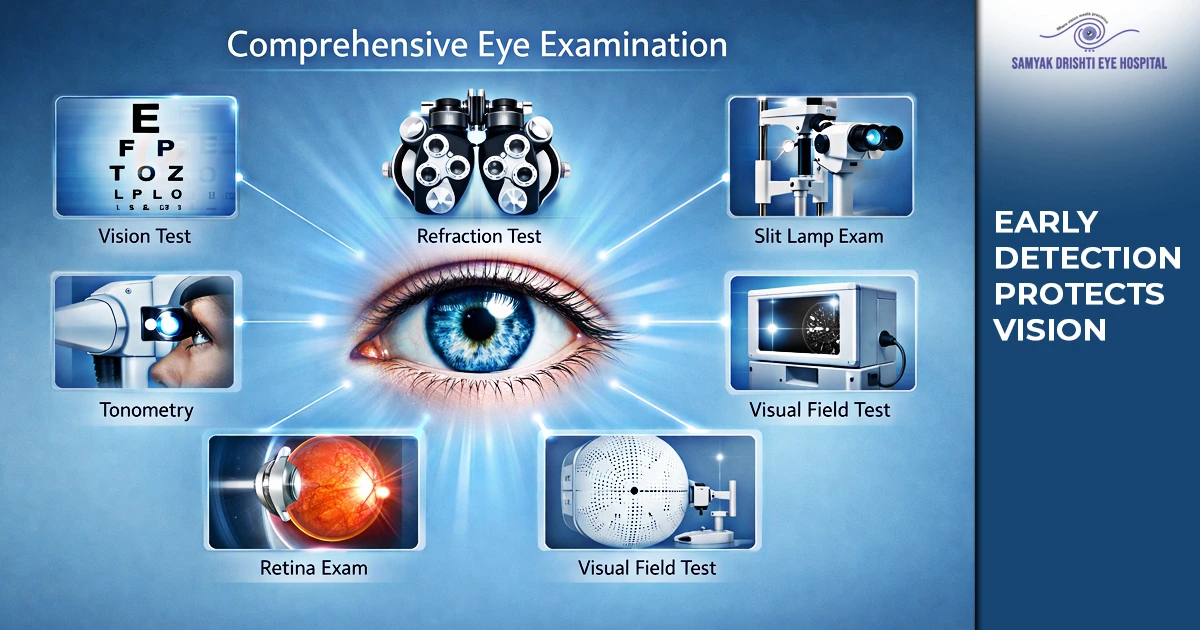
The illustration below shows the key diagnostic procedures included in a comprehensive eye examination performed by ophthalmologists.
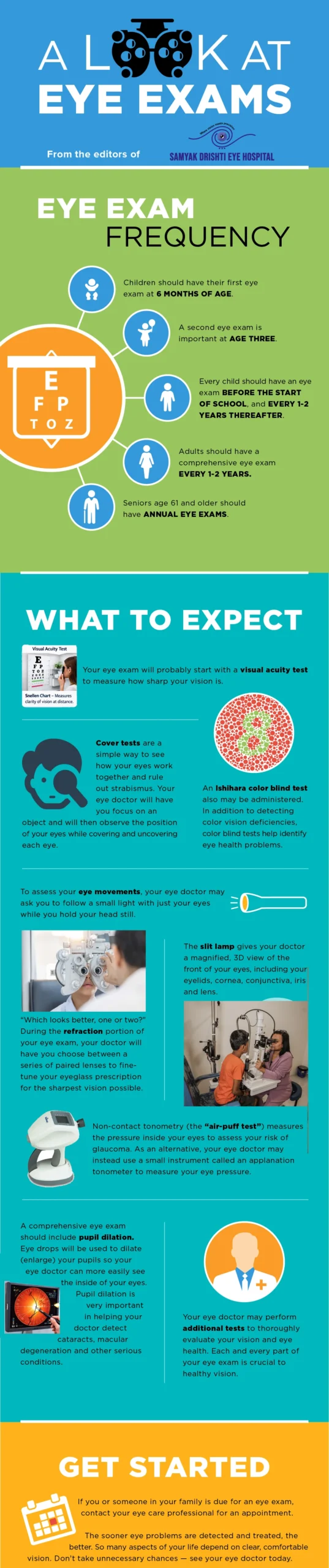
A comprehensive eye examination includes multiple diagnostic tests to evaluate vision and overall eye health.
The visual acuity test measures how clearly a person can see letters or symbols at a specific distance using an eye chart. It helps determine the clarity of vision and identifies possible refractive errors.
A refraction test determines the exact prescription required for glasses or contact lenses. The doctor or optometrist uses a phoropter or trial lenses to identify the lens power that provides the clearest vision.
A slit lamp microscope allows the doctor to examine the front structures of the eye, including the cornea, iris, and lens. This test helps detect conditions such as cataracts, corneal problems, and infections.
Tonometry measures the pressure inside the eye. Elevated intraocular pressure may indicate a risk of glaucoma, a condition that can damage the optic nerve if untreated.
The retina examination allows doctors to examine the retina, optic nerve, and blood vessels inside the eye. This test is essential for detecting retinal diseases, diabetic retinopathy, and macular degeneration
This test evaluates how well the eye muscles coordinate movement and alignment. It helps identify conditions such as eye strain, double vision, or muscle imbalance.
A visual field or peripheral vision test measures side vision and helps detect conditions such as glaucoma or neurological problems affecting the visual pathway.
Comprehensive eye examinations are recommended for people of all ages.
Children should undergo periodic eye examinations to detect vision problems that may affect learning and academic performance. Early detection of conditions such as myopia or lazy eye is important for proper visual development.
Adults may experience vision changes due to digital screen use, refractive errors, or lifestyle factors. Routine eye examinations help maintain optimal vision and detect early eye disease.
As people age, the risk of eye conditions such as cataracts, glaucoma, and macular degeneration increases. Regular eye examinations allow early diagnosis and timely treatment.
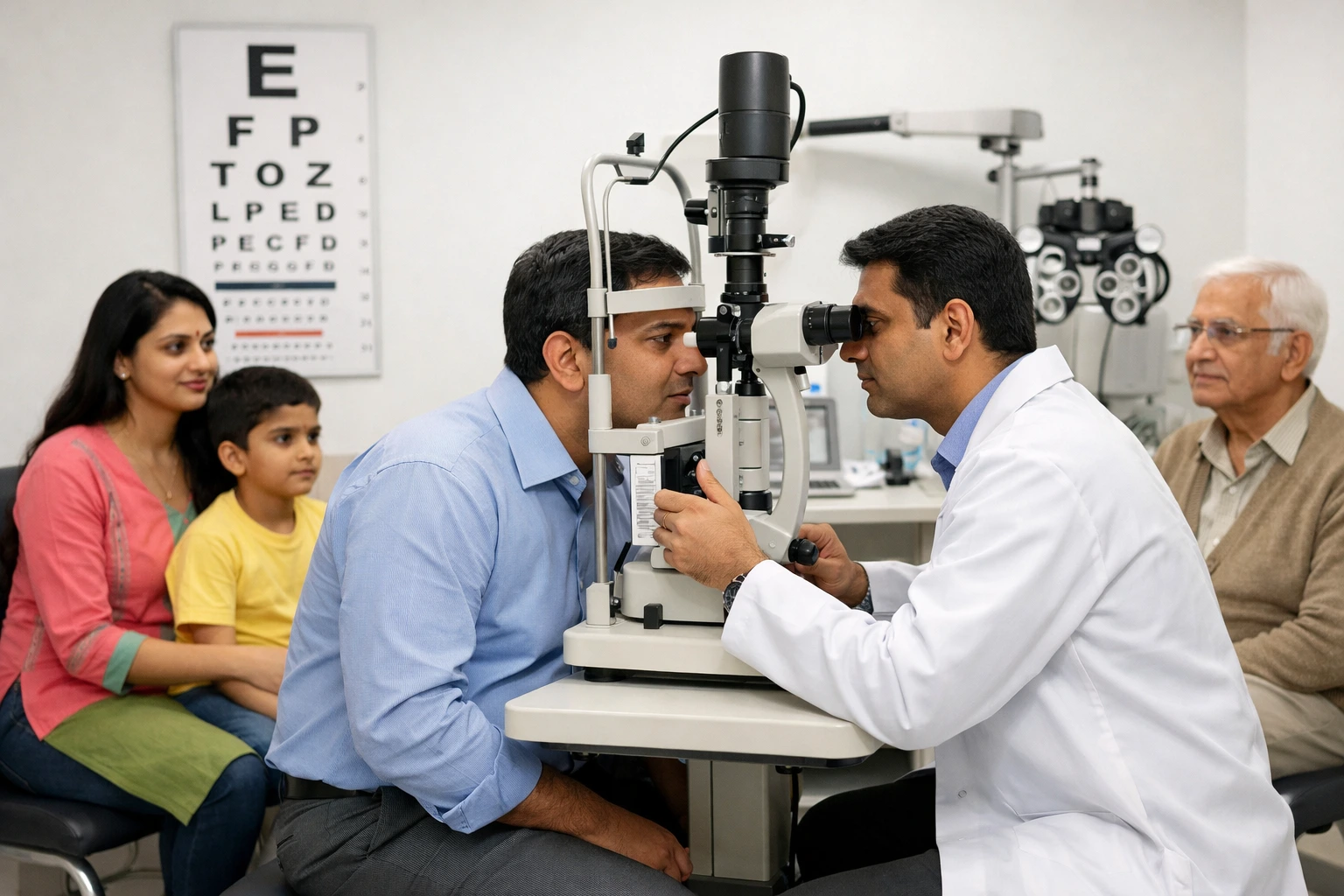
Comprehensive eye examinations are recommended for people of all age groups.
The recommended frequency of eye examinations depends on age and individual risk factors.
| Age Group | Recommended Eye Exam Frequency |
| Children | Every 1–2 years |
| Adults | Every 2 years |
| Above 40 years | Every year |
| Diabetic patients | Every year |
People with existing eye conditions or systemic diseases may require more frequent monitoring.
You should consider an eye examination if you experience symptoms such as:
These symptoms may indicate underlying vision problems that require evaluation by an eye specialist.

Blurred vision and headaches may indicate the need for an eye examination.
A typical comprehensive eye exam involves several steps.
The entire examination usually takes 20–30 minutes, depending on the tests required.
At Samyak Drishti Eye Hospital in South Bangalore, comprehensive eye examinations are performed using modern diagnostic equipment and experienced eye care professionals.
Our evaluation includes:
Our goal is to provide accurate diagnosis and preventive eye care for patients of all ages.
The cost of an eye examination may vary depending on:
During consultation, the doctor will recommend the appropriate tests based on your eye health and vision needs.
Our Cataract Surgeon in South Bangalore
Cataract surgery at Samyak Drishti Eye Hospital is performed by highly experienced ophthalmologist trained in advanced Phaco and MICS techniques, ensuring safe and consistent visual outcomes.
Dr. Shwetha Jain is highly experienced and has performed over 10000+ Phaco and MICS cataract surgery procedures in Bangalore
A comprehensive eye examination includes vision testing, refraction, slit lamp examination, eye pressure measurement, retina examination, and evaluation of eye health.
Most comprehensive eye examinations take about 20 to 30 minutes, depending on the tests performed.
Yes. Eye pressure testing and optic nerve evaluation during a comprehensive eye exam help detect early signs of glaucoma.
Yes. Retina examination can reveal changes in blood vessels that may indicate diabetes or diabetic retinopathy.
Yes. Many eye diseases develop without noticeable symptoms in the early stages. Regular eye exams help detect problems before vision is affected.
Regular eye examinations are essential for maintaining healthy vision and detecting eye diseases early.
If you are experiencing vision changes or have not had an eye exam recently, schedule a comprehensive eye examination at Samyak Drishti Eye Hospital in South Bangalore.