Dr. Shwetha Jain is highly experienced and has performed over 10000+ Phaco and MICS cataract surgery procedures in Bangalore

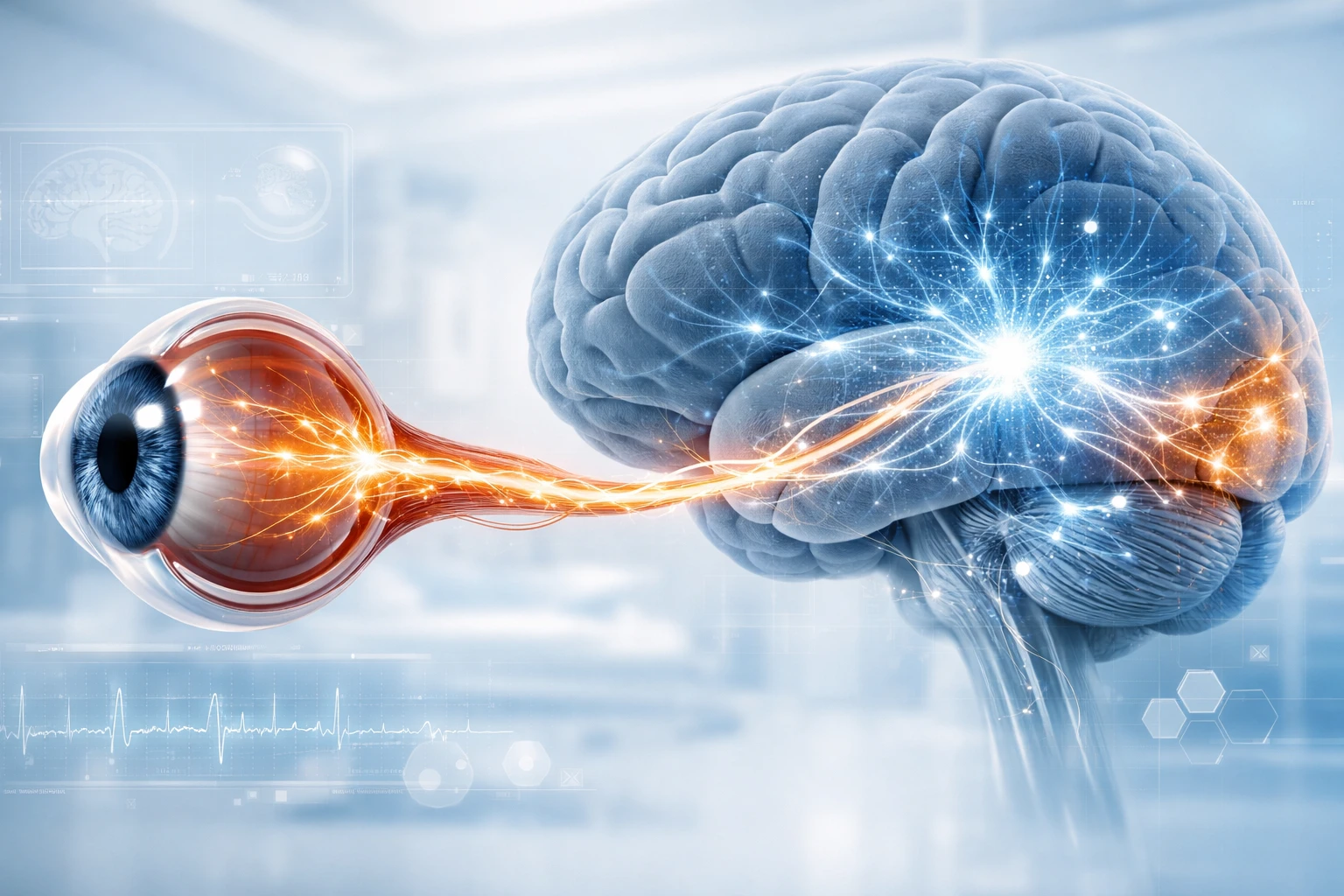
Neuro-ophthalmology focuses on how visual signals travel from the eye to the brain.
Neuro-ophthalmology is a specialized field that focuses on vision problems related to the brain, optic nerve, and nervous system.
These conditions affect how visual information is transmitted from the eyes to the brain and can result in vision loss, double vision, or abnormal eye movements.
At Samyak Drishti Eye Hospital in South Bangalore, neuro-ophthalmology services include diagnosis and management of optic nerve diseases, neurological vision disorders, and eye movement abnormalities.
Early diagnosis is critical to identify underlying neurological conditions and protect vision.
Neuro-ophthalmology deals with conditions that involve both:
It focuses on how visual signals travel from the retina to the brain via the optic nerve and visual pathways.
Disorders in this pathway can lead to:
Neuro-ophthalmologists diagnose and manage a wide range of conditions.
Optic neuritis is inflammation of the optic nerve, which can cause:
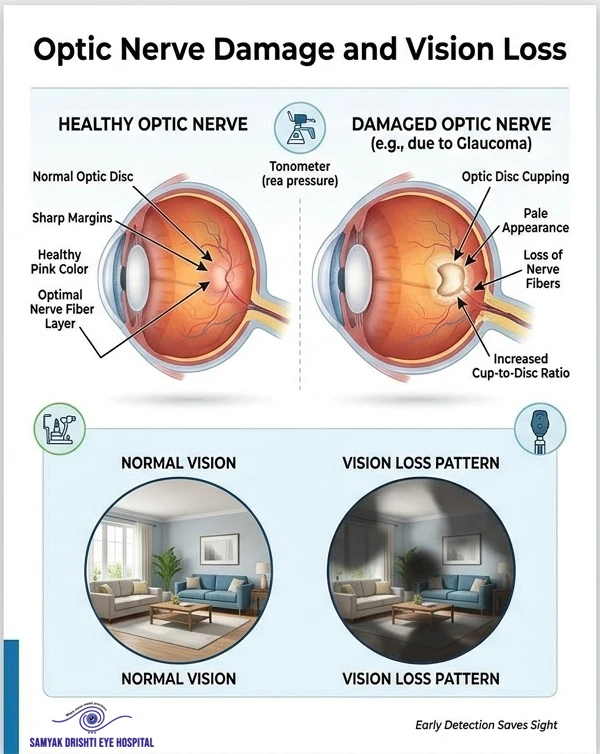
Damage to the optic nerve can lead to vision loss and visual field defects.
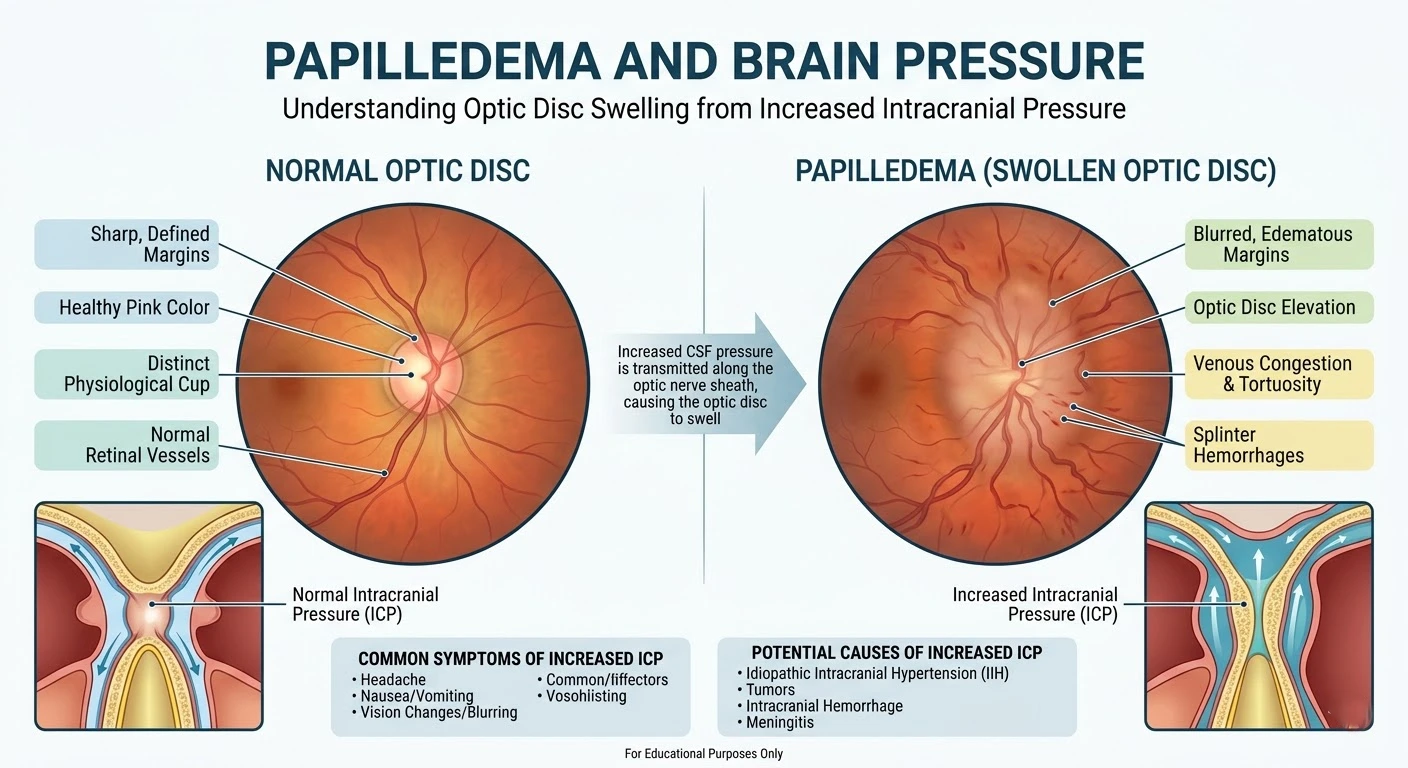
Papilledema indicates increased pressure inside the brain affecting the optic nerve.
Papilledema refers to swelling of the optic nerve due to increased intracranial pressure.
This condition requires urgent evaluation to identify underlying causes.
Damage to the visual pathway can lead to loss of vision in certain areas (visual field loss).
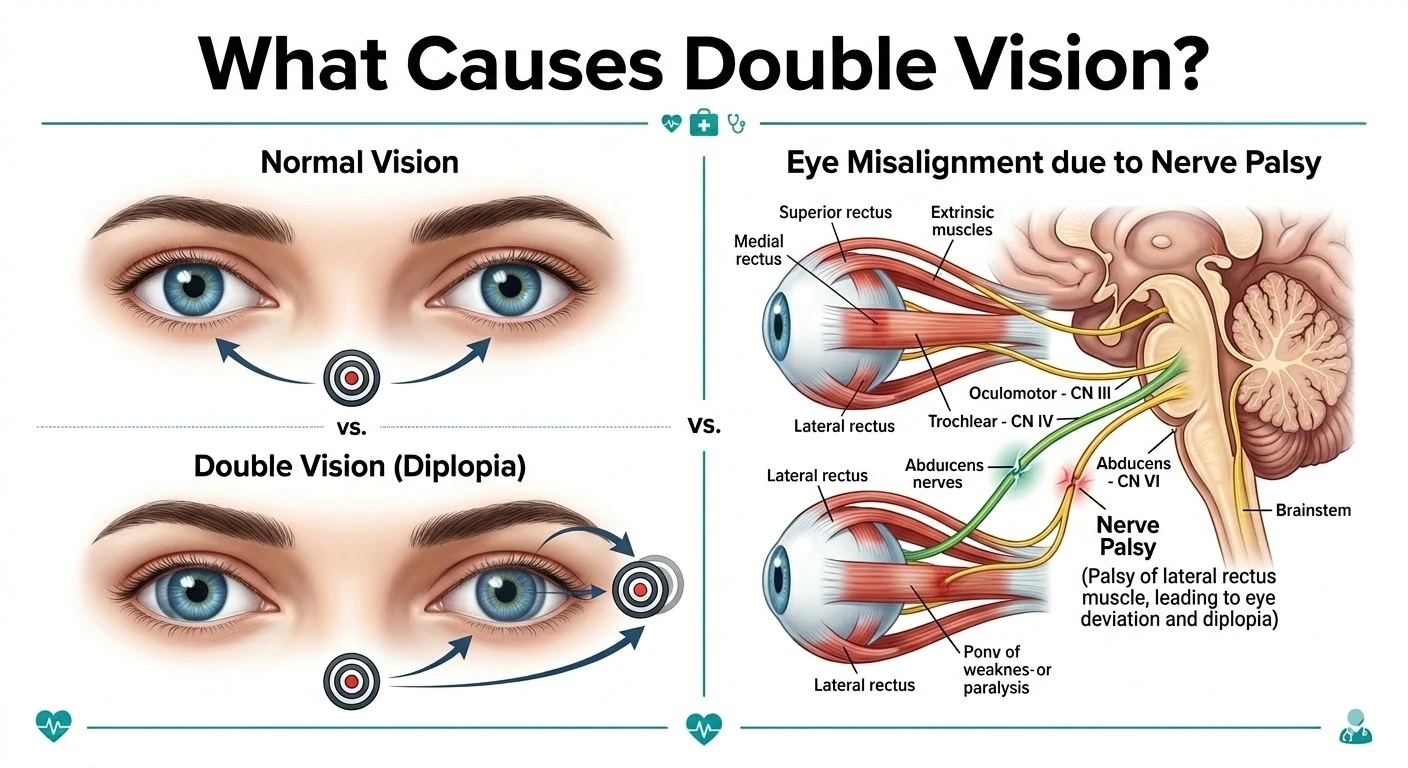
Double vision can occur due to nerve or muscle problems affecting eye alignment.
Double vision may occur due to problems in:
Damage to cranial nerves controlling eye movement can cause:
Reduced blood supply to the optic nerve can lead to sudden vision loss.
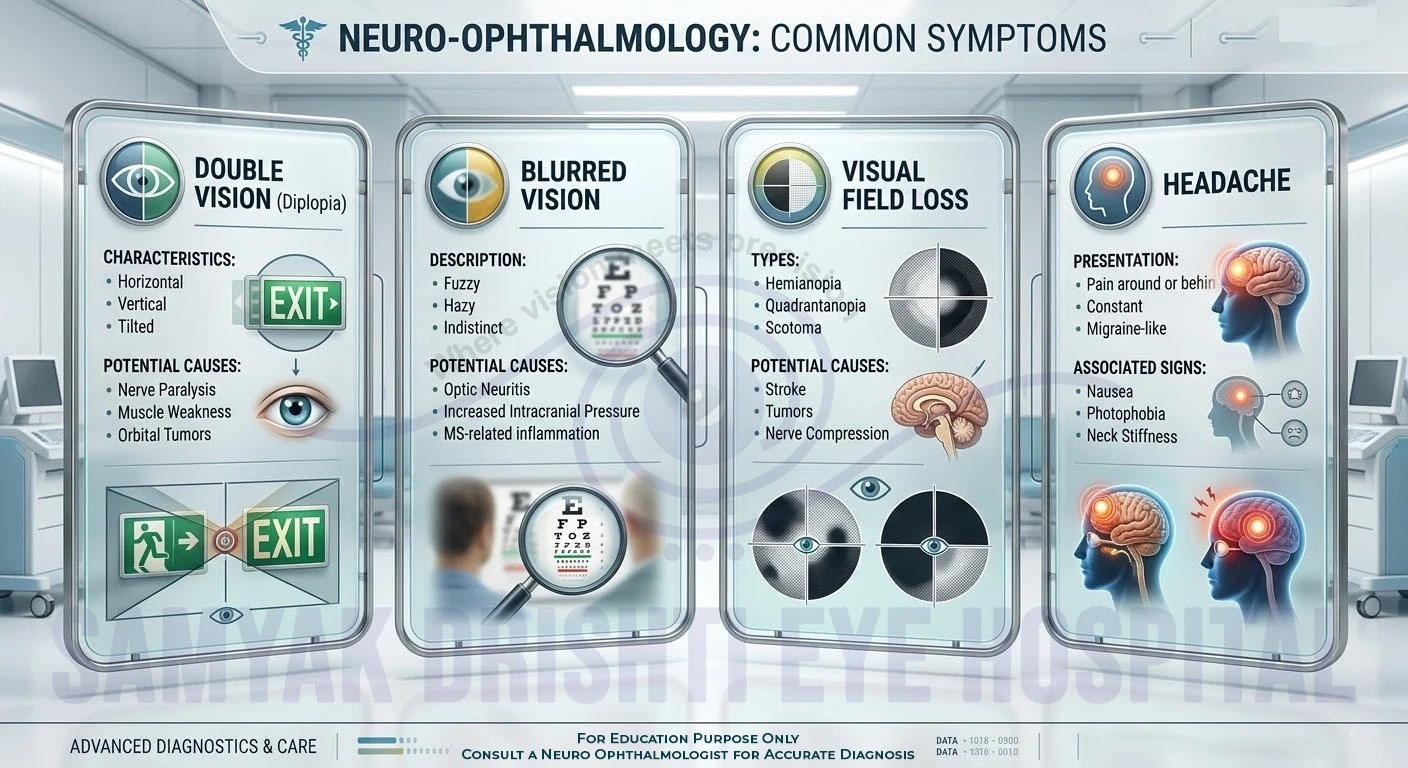
Neuro-ophthalmic disorders can cause vision changes such as double vision and visual field loss.
You should seek evaluation if you experience:
These symptoms may indicate underlying neurological conditions.
Diagnosis requires a combination of eye examination and neurological evaluation.
At Samyak Drishti Eye Hospital, evaluation may include:
These tests help identify the exact cause of vision problems.
Treatment depends on the underlying cause.
Many neuro-ophthalmic conditions are treated with medications to:
Some conditions require coordination with:
Regular follow-up is important to:
At Samyak Drishti Eye Hospital in South Bangalore, neuro-ophthalmology care focuses on identifying the root cause of vision problems.
Our approach includes:
Our goal is to protect vision while addressing underlying neurological conditions.
You should consult a specialist if you experience:
Early evaluation helps prevent serious complications.
Neuro-ophthalmic conditions require specialized expertise and precise diagnosis.
At Samyak Drishti Eye Hospital, these conditions are managed by experienced eye specialists trained in evaluating complex vision disorders related to the brain and optic nerve.
Our specialists focus on identifying underlying causes and providing appropriate treatment to protect vision.

Founder, Director – Consultant, Anterior segment (cataract) Surgeon and Refractive Surgeon
Dr. Shwetha Jain is a refractive surgery specialist with expertise in LASIK and SMILE procedures for correcting myopia, hyperopia, and astigmatism. The doctor performs comprehensive eye assessments to ensure safe and precise laser vision correction.
A neuro-ophthalmologist specializes in vision problems related to the nervous system and brain.
Double vision can indicate neurological issues and should be evaluated promptly.
Treatment depends on the cause, but early diagnosis improves outcomes.
In some cases, imaging such as MRI may be required to identify neurological causes.
Yes. Some neurological conditions causing headaches can also affect vision.
If you experience unexplained vision problems or neurological symptoms affecting your eyes, early evaluation is essential.
At Samyak Drishti Eye Hospital, neuro-ophthalmology services are designed to diagnose complex conditions and protect vision.