
Dr. Shwetha Jain is highly experienced and has performed over 10000+ Phaco and MICS cataract surgery procedures in Bangalore

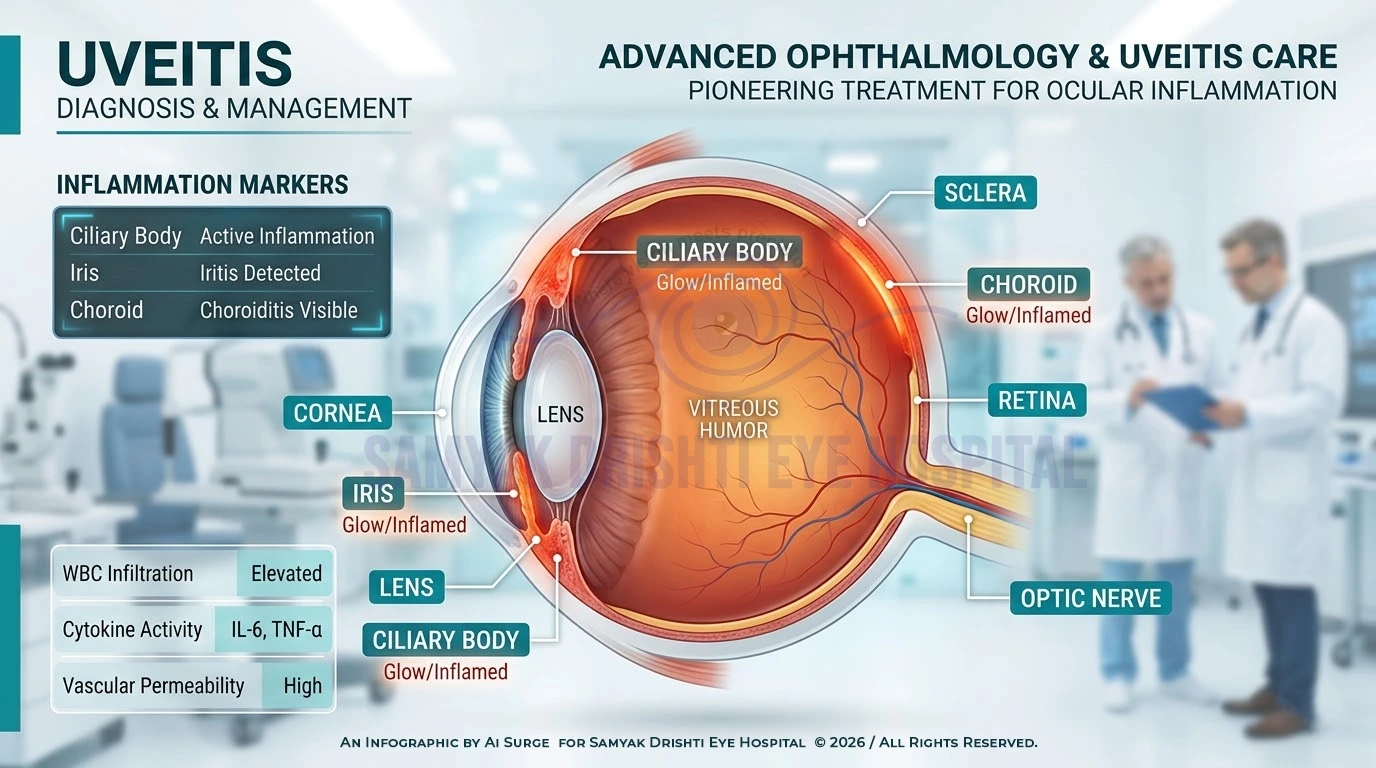
Uveitis is inflammation of the uveal layer of the eye and requires specialized treatment.
The uvea is the middle layer of the eye, consisting of the iris, ciliary body, and choroid. Inflammation of this layer is known as uveitis, a condition that can lead to serious vision complications if not treated early.
Uveitis can affect people of all ages and may be associated with systemic diseases, infections, or autoimmune conditions.
At Samyak Drishti Eye Hospital in South Bangalore, the Uvea Clinic provides specialized care for diagnosing and managing uveitis and other inflammatory eye diseases.
Early diagnosis and timely treatment are essential to control inflammation and preserve vision.
Uveitis refers to inflammation of the uveal tissue of the eye, which includes:
Uveitis can occur suddenly or develop gradually and may affect one or both eyes.
If left untreated, uveitis can lead to complications such as:
Uveitis is classified based on the part of the eye affected.
Affects the front part of the eye (iris).
This is the most common type of uveitis.
Affects the vitreous and middle portion of the eye.
Affects the retina and choroid and can significantly impact vision.
Involves inflammation of all layers of the uvea.
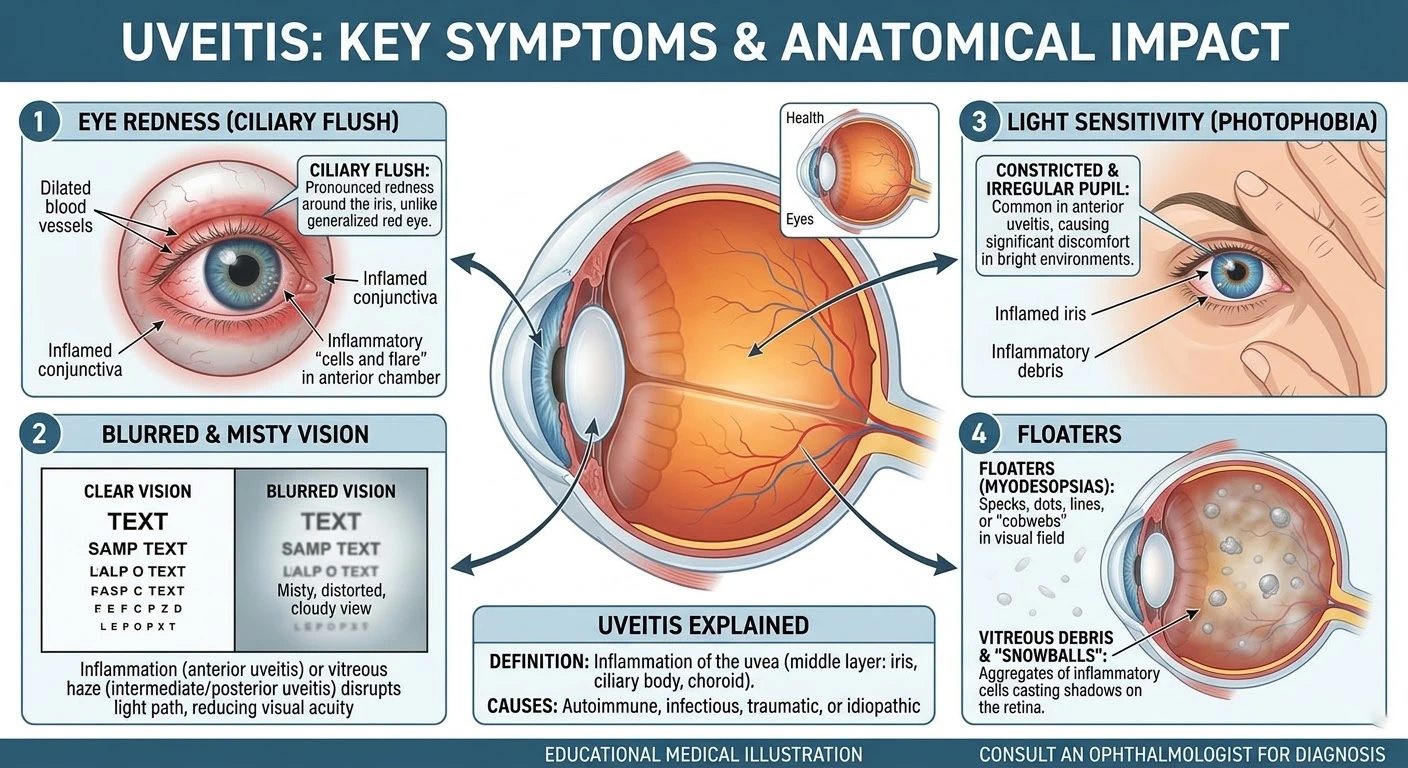
Common symptoms of uveitis include eye redness, blurred vision, and light sensitivity.
Uveitis can present with a variety of symptoms, including:
Symptoms may develop suddenly and require immediate medical attention.
Uveitis may occur due to several underlying factors.
Common causes include:
In many cases, uveitis may be linked to systemic health conditions, requiring a multidisciplinary approach.
Diagnosing uveitis requires a detailed eye examination and medical history evaluation.
At Samyak Drishti Eye Hospital, diagnosis may include:
Accurate diagnosis helps identify the underlying cause of inflammation and guides appropriate treatment.
Treatment for uveitis depends on the severity and underlying cause.
The primary goal is to reduce inflammation, relieve symptoms, and prevent complications.
Treatment may include:
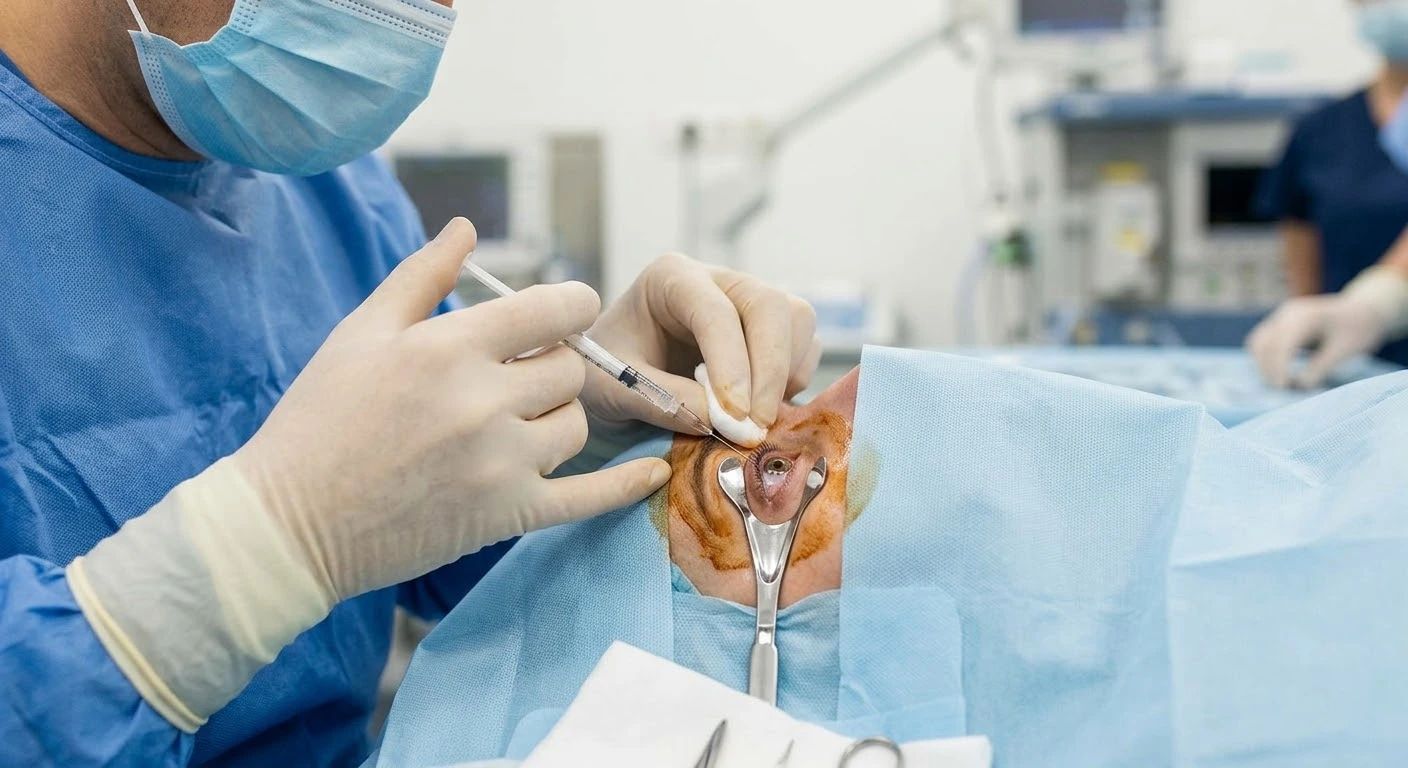
Intravitreal injections deliver medication directly into the eye to control inflammation.
In certain cases, medication may be delivered directly into the eye to control inflammation more effectively.
Some patients may require ongoing treatment and monitoring to prevent recurrence.
Regular follow-up is essential to manage chronic uveitis.
At Samyak Drishti Eye Hospital in South Bangalore, the Uvea Clinic offers specialized care for inflammatory eye diseases.
Our approach includes:
Our goal is to control inflammation, prevent complications, and preserve vision.
You should consult a specialist if you experience:
Early consultation helps prevent complications and improves treatment outcomes.
Uveitis requires specialized expertise and careful monitoring.
At Samyak Drishti Eye Hospital, uveitis is managed by experienced eye specialists trained in diagnosing and treating inflammatory eye conditions.
Our specialists focus on identifying the underlying cause and providing targeted treatment to control inflammation and protect vision.

Founder, Director – Consultant, Anterior segment (cataract) Surgeon and Refractive Surgeon
Dr. Shwetha Jain is a refractive surgery specialist with expertise in LASIK and SMILE procedures for correcting myopia, hyperopia, and astigmatism. The doctor performs comprehensive eye assessments to ensure safe and precise laser vision correction.
Yes. Uveitis can lead to vision complications if not treated early, but timely treatment can control inflammation effectively.
Some forms of uveitis can be treated completely, while others may require long-term management.
Yes. Uveitis is often associated with autoimmune or systemic conditions.
The duration of treatment depends on the type and severity of uveitis.
If untreated, uveitis can lead to serious complications affecting vision.
If you experience symptoms of eye inflammation or recurrent eye problems, early evaluation is essential.
At Samyak Drishti Eye Hospital, our Uvea Clinic provides comprehensive care for uveitis and related conditions.