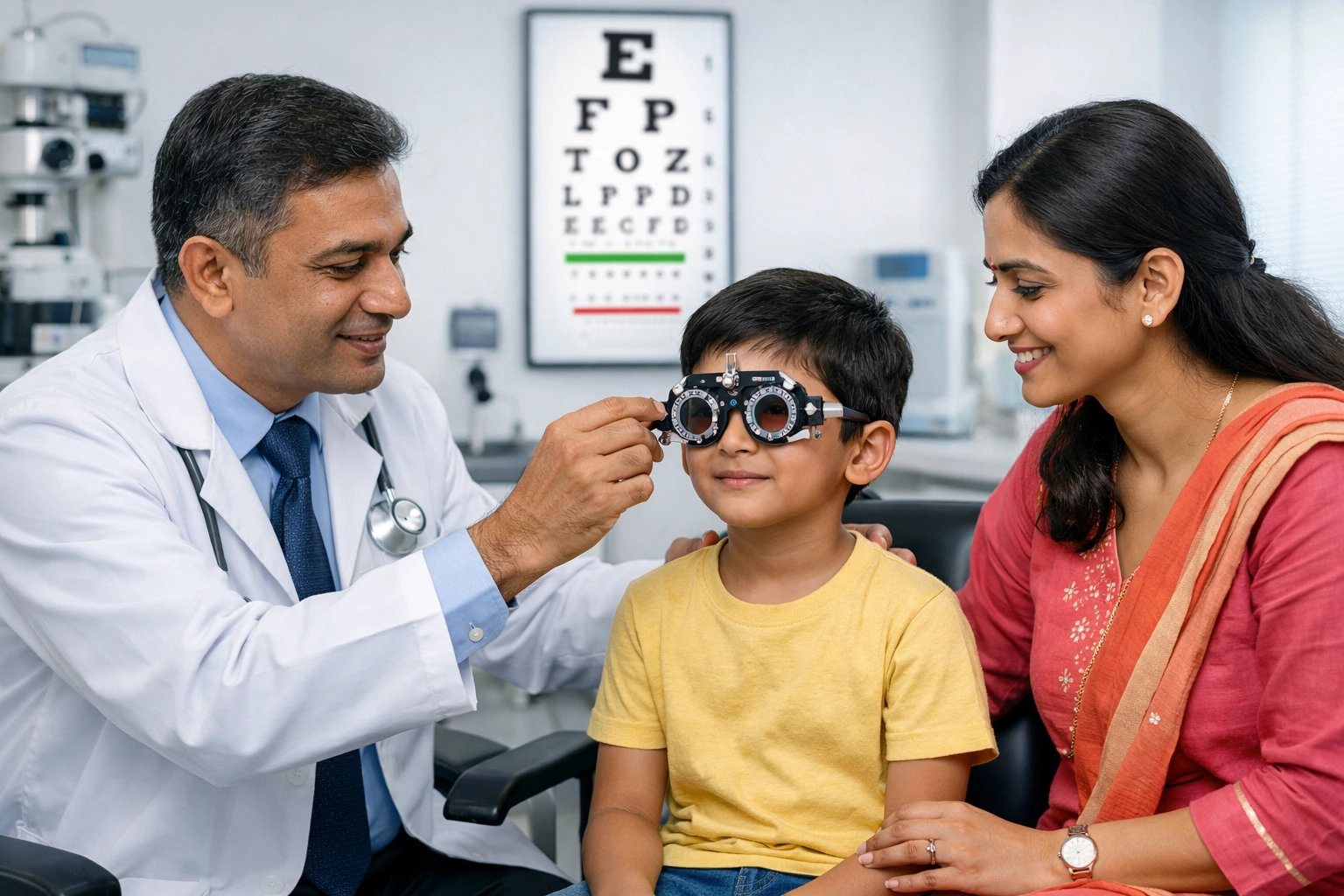
Diwakar Rao is an experienced optometrist with over 20 years of clinical experience in paediatric vision care, myopia management. He also specializes in orthokeratology lens fitting and Vision Therapy

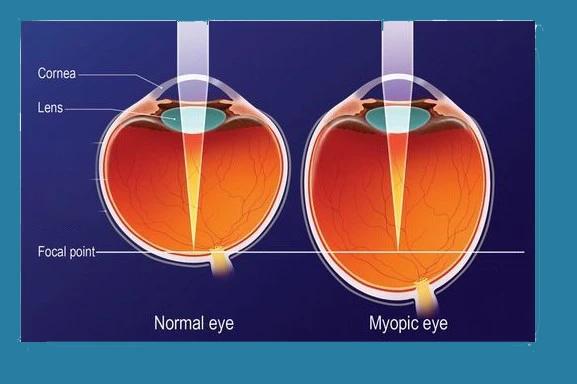
In myopia (near-sightedness), light focuses in front of the retina instead of directly on it, causing distant objects to appear blurry.
Myopia, also called near-sightedness, is a condition where distant objects appear blurry while near objects remain clear. It commonly develops in school-going children between 6 and 16 years of age.
Myopia occurs when the eyeball grows longer than normal, causing light rays to focus in front of the retina instead of directly on it.
Without proper management, the power of glasses may increase every year, which can lead to high myopia and future eye health risks.
Doctors across the world are seeing a rapid rise in childhood myopia due to:
Research suggests that early myopia management can slow the progression of eye power and reduce the risk of high myopia later in life.
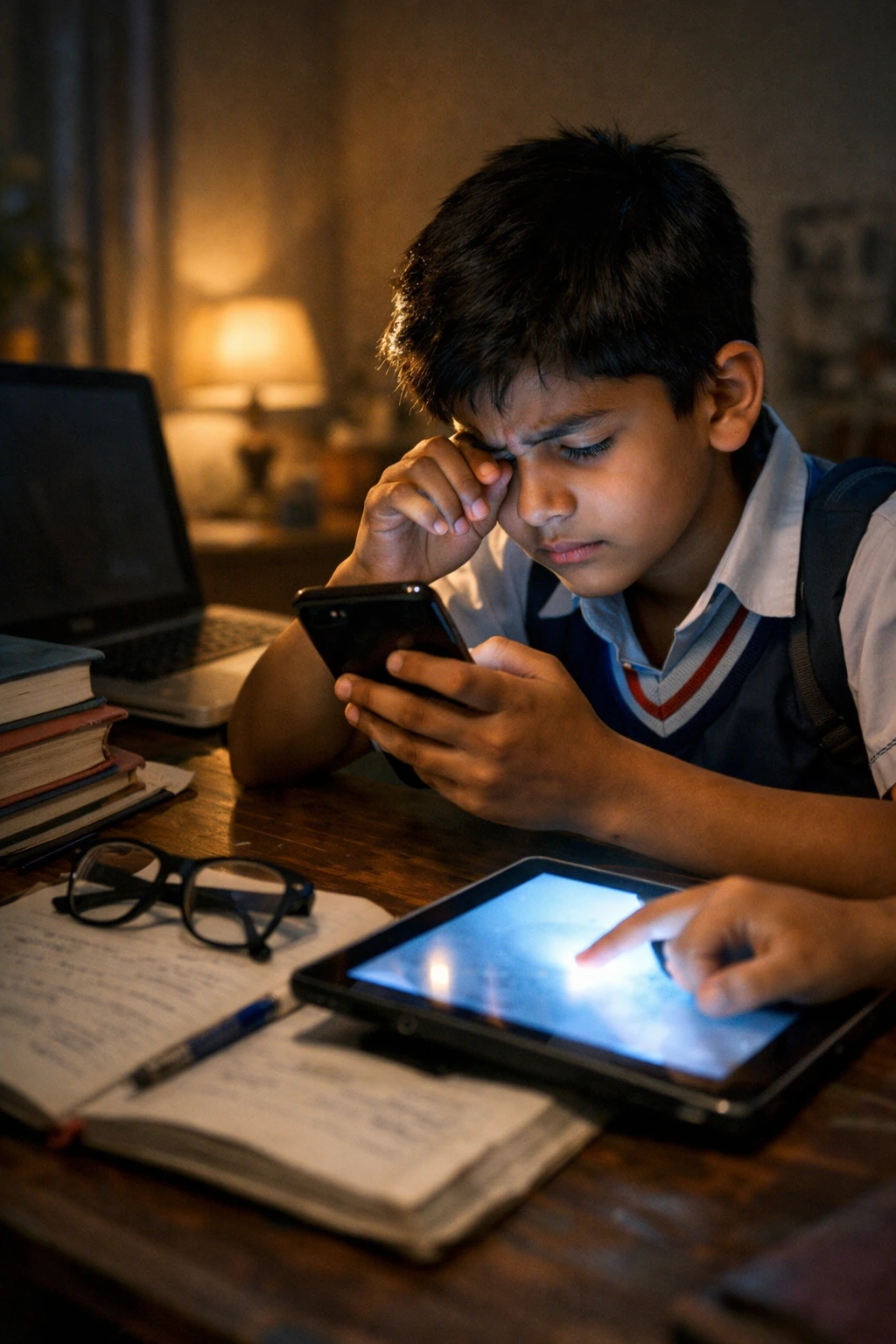
Increased screen time and reduced outdoor activity contribute to rising myopia in children.
Parents should watch for the following symptoms:
If your child shows these signs, a comprehensive pediatric eye examination is recommended.
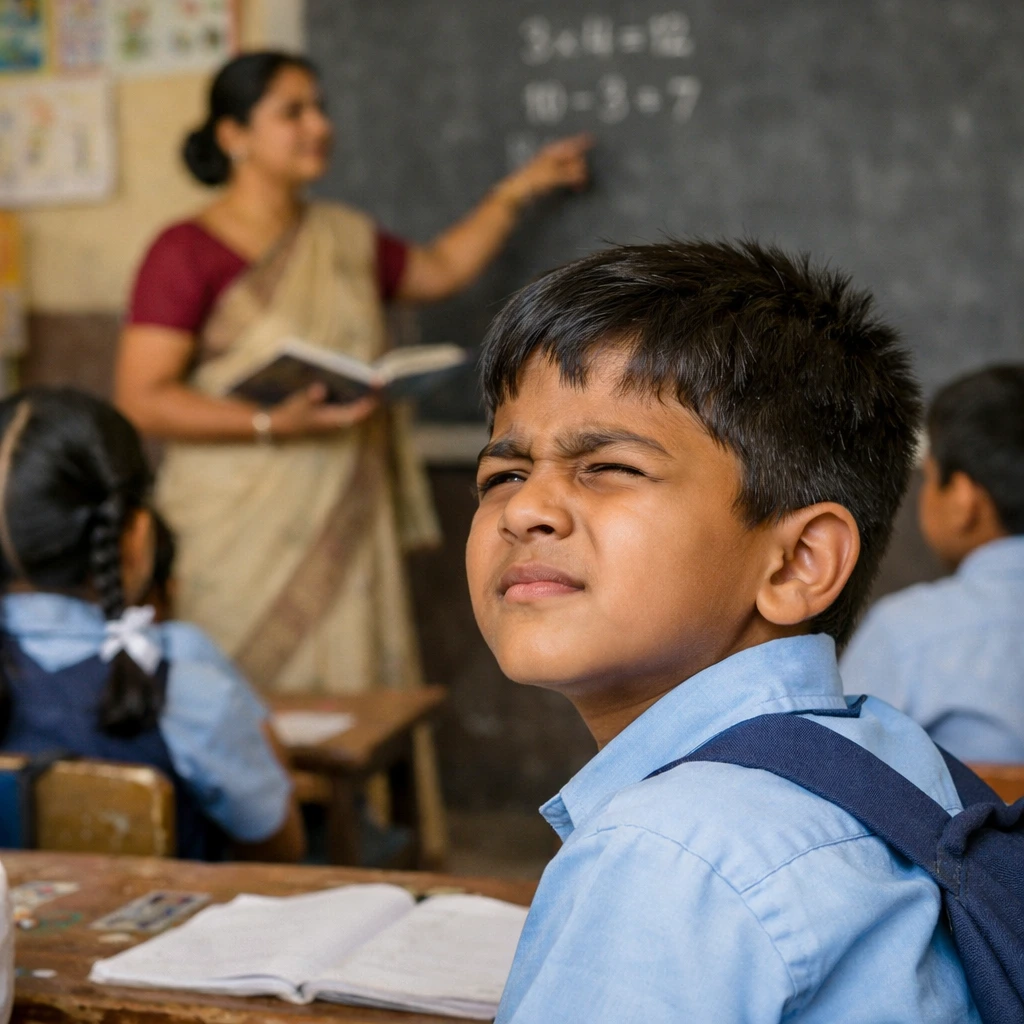
Children with myopia may squint or struggle to see distant objects clearly.
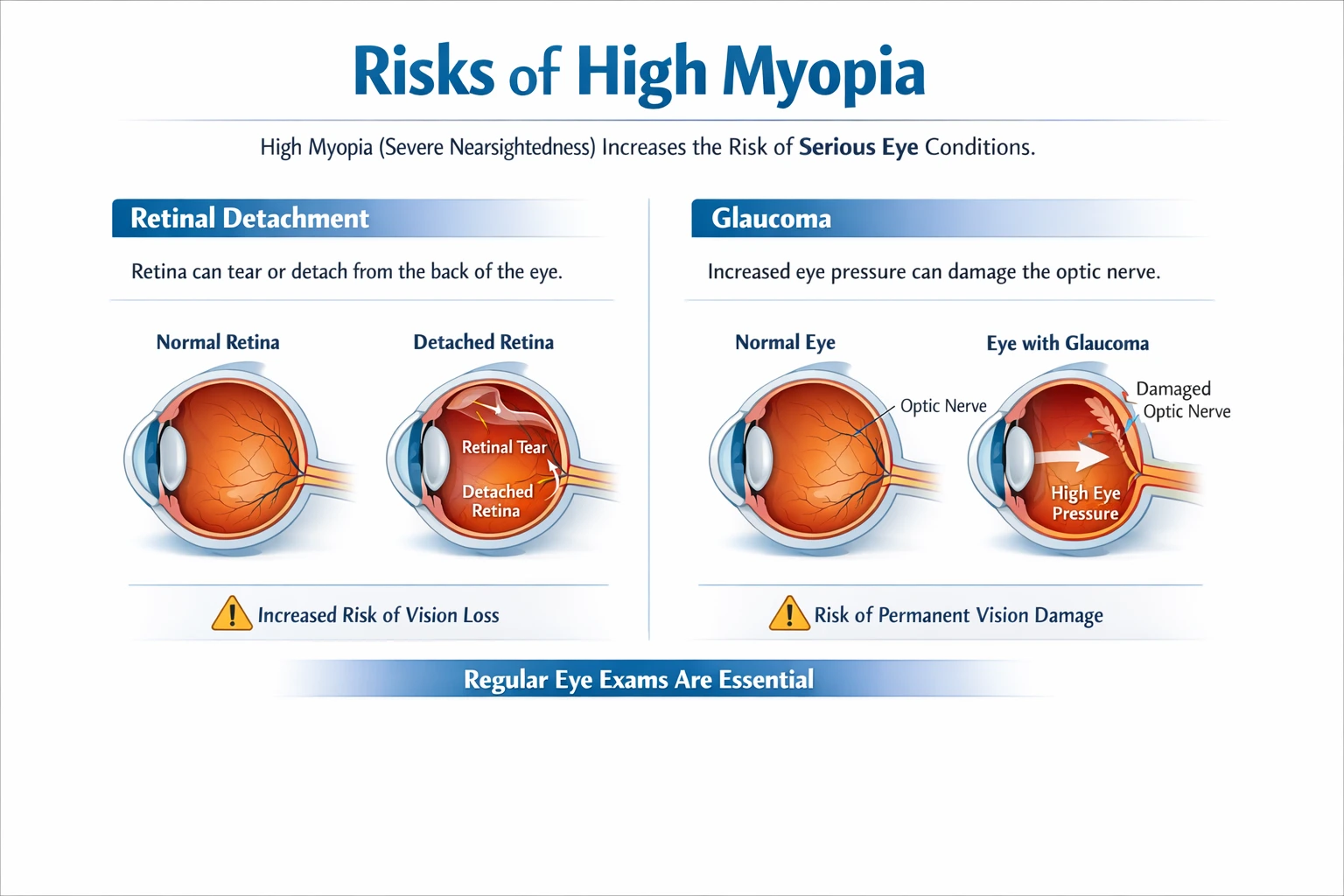
High myopia can increase the risk of several serious eye conditions.
Many parents think glasses alone are enough. However, myopia progression can continue even after wearing glasses.
High myopia increases the lifetime risk of serious eye conditions such as:
Early intervention helps slow the rate at which eye power increases.
At Samyak Drishti Eye Hospital in South Bangalore, we offer a structured Myopia Control Program for children designed to monitor and slow myopia progression.
The program includes:
Our goal is to protect your child’s long-term vision health.
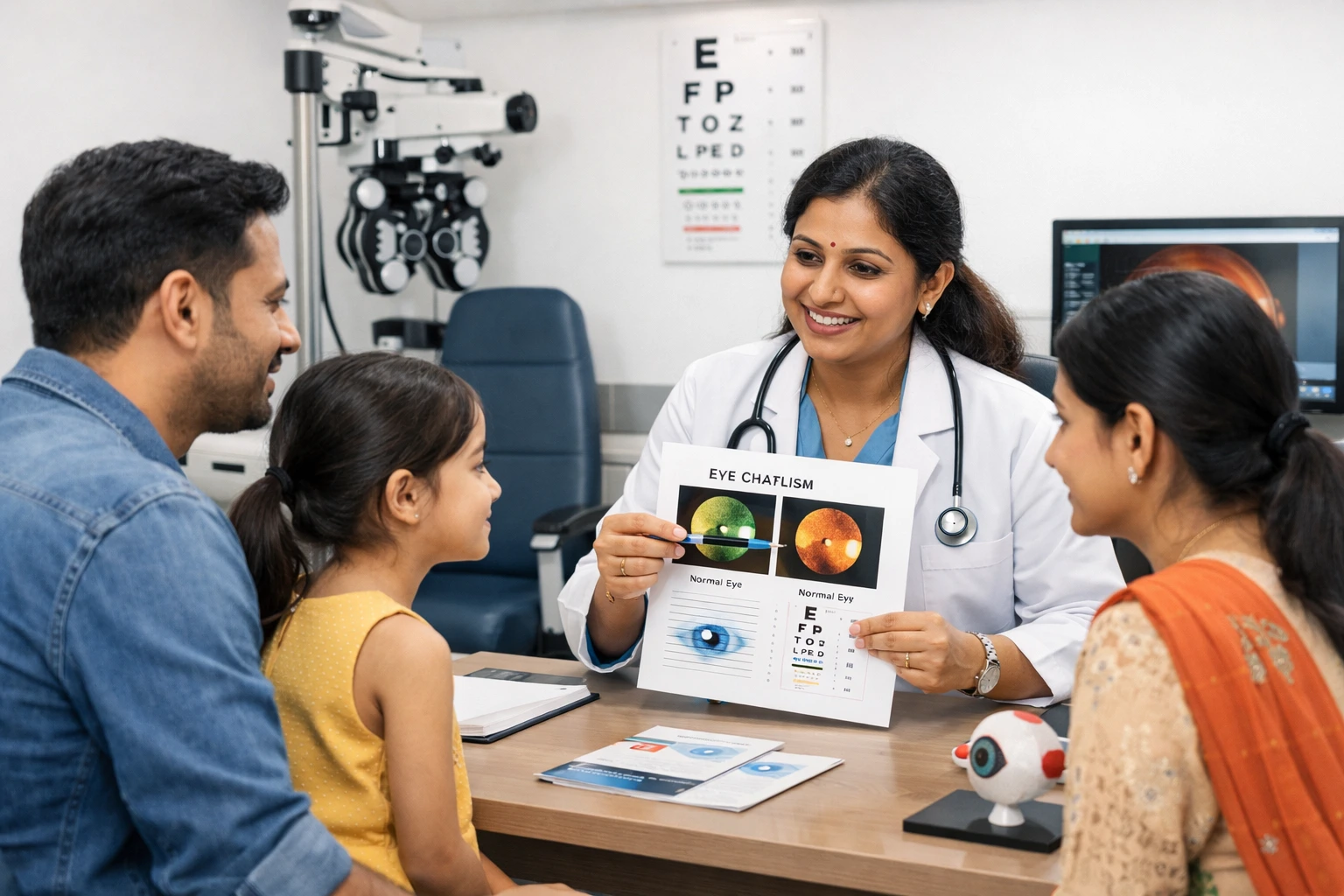
A structured myopia control program helps monitor and manage eye power progression.
Modern myopia management focuses on slowing the progression of eye power in children. Several clinically proven treatment options are available, and the most suitable method depends on the child’s age, lifestyle, and degree of myopia.
At Samyak Drishti Eye Hospital, our pediatric eye specialists recommend personalized myopia control plans that may include specialized spectacle lenses, therapeutic contact lenses, and medical treatments.

Specialized spectacle lenses may help slow the progression of myopia.
Specially designed myopia control spectacle lenses are widely used to slow the progression of near-sightedness in children.
Unlike regular glasses, these lenses use advanced optical designs that help control how light focuses on the retina, which may help slow excessive eye growth responsible for increasing eye power.
Some of the most widely used myopia control spectacle lens brands available in India include:
Hoya MiYOSMART lenses use DIMS (Defocus Incorporated Multiple Segments) technology to correct vision while slowing myopia progression in children. Clinical studies have shown they can slow progression by about 60% compared to standard lenses.
👉 Learn more about
→ Hoya MiYOSMART Lenses (URL: blog/hoya-miyosmart-lenses/)
Essilor Stellest lenses use Highly Aspherical Lenslet Target (HALT) technology designed to slow the elongation of the eye and reduce the progression of myopia.
👉 Learn more about
Essilor Stellest Myopia Control Lenses (url: blog/essilor-stellest-myopia-control-lenses/)
Zeiss MyoCare lenses use C.A.R.E. (Cylindrical Annular Refractive Elements) technology designed to provide clear vision while managing peripheral defocus to control myopia progression.
👉 Learn more about
Zeiss MyoCare Myopia Control Lenses (url: blog/zeiss-myocare-myopia-control/)
For some children and teenagers, specially designed contact lenses can help slow myopia progression while providing clear vision and greater freedom during sports and daily activities.
There are two main categories of therapeutic contact lenses used for myopia management: soft myopia control lenses and orthokeratology lenses.
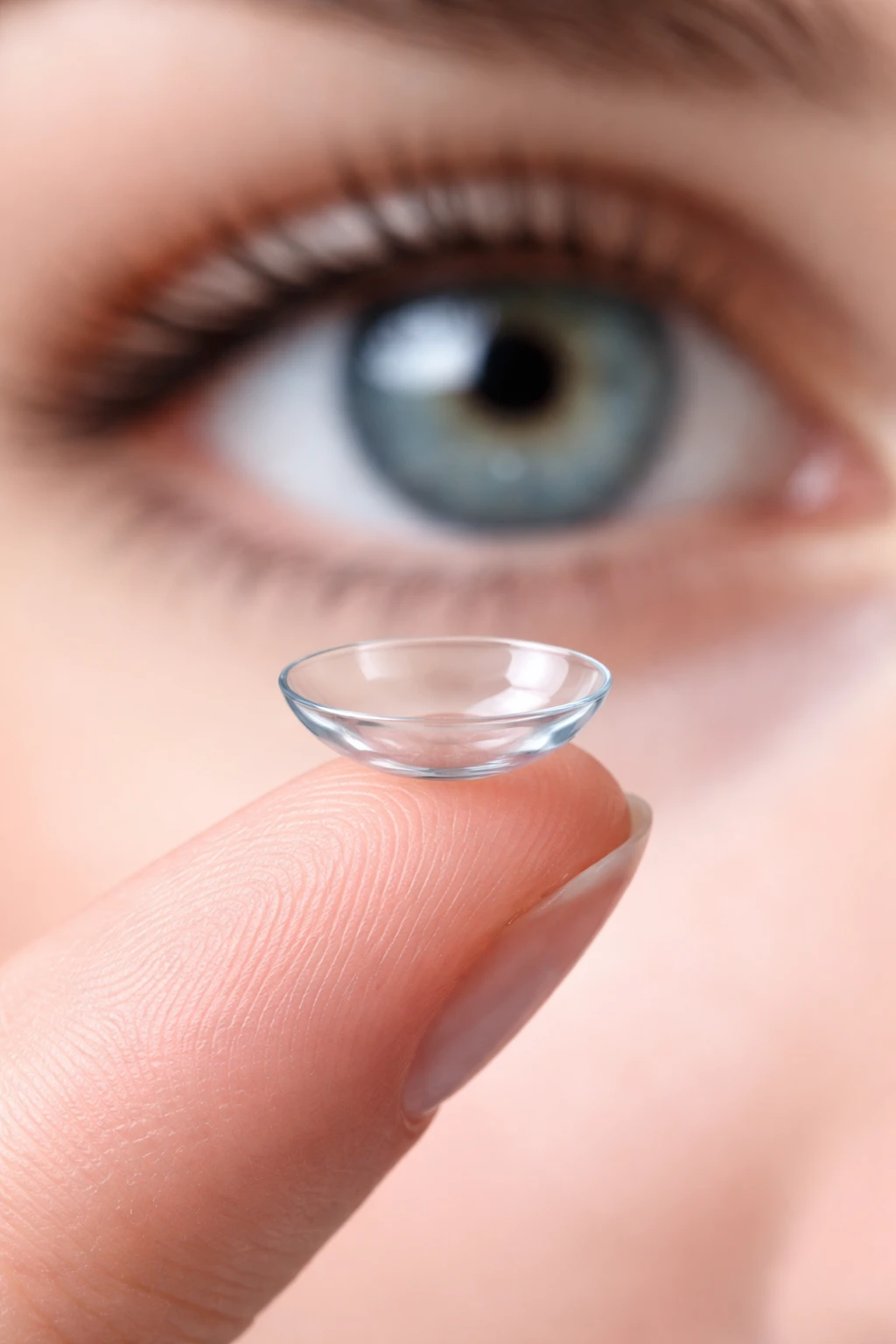
Specialized contact lenses can help slow myopia progression in children.
Orthokeratology lenses are specially designed rigid gas-permeable contact lenses worn overnight during sleep.
These lenses gently reshape the cornea so that the child can see clearly during the day without glasses. Ortho-K lenses are also widely used to slow myopia progression.
👉 Learn more about
Orthokeratology Lenses for Myopia Control (url: blog/ortho-k-lenses-myopia-control/)
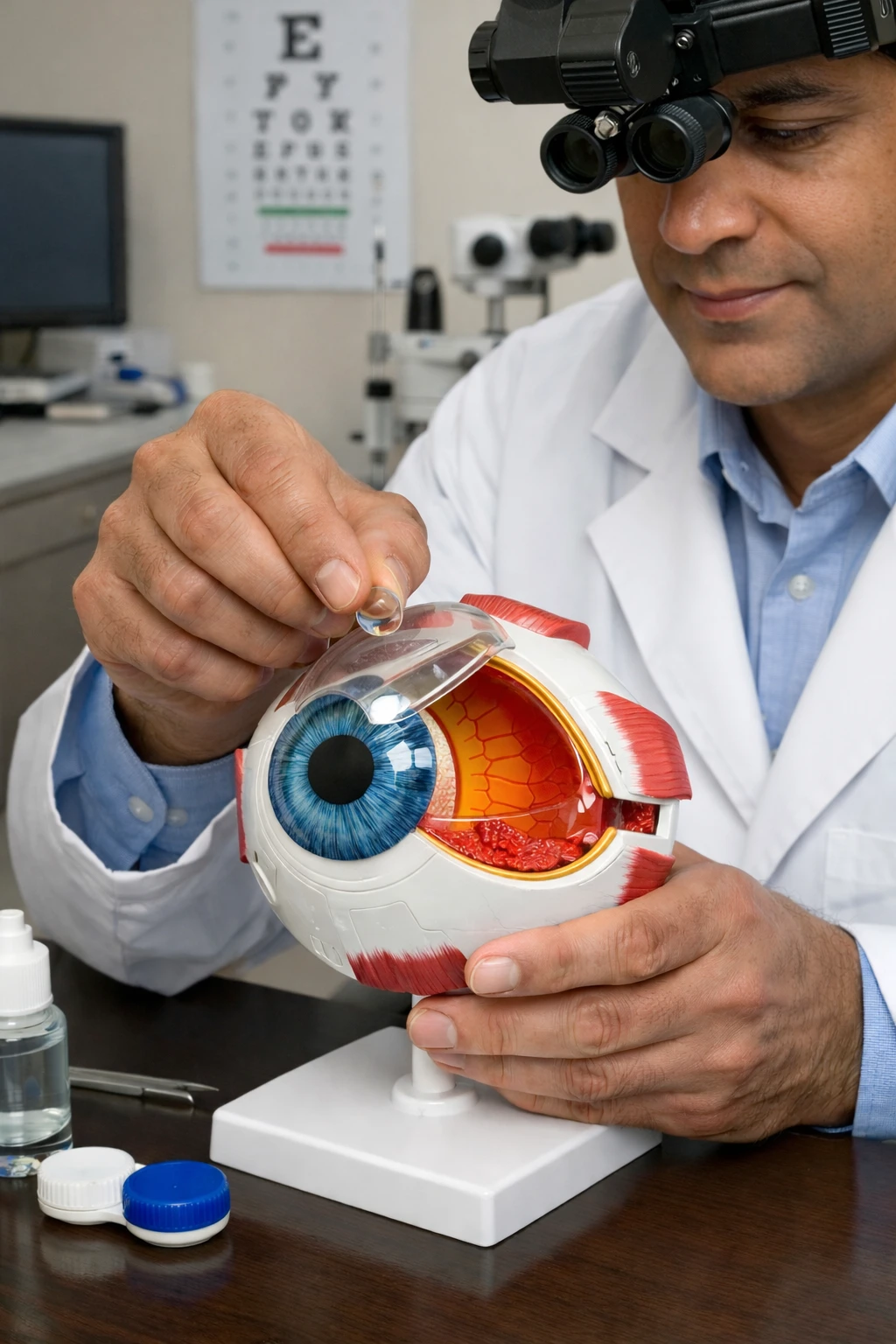
Ortho-K lenses reshape the cornea overnight to improve daytime vision.
These lenses are worn during the day and contain special optical zones that help reduce the progression of myopia by controlling peripheral defocus.
👉 Learn more about
Dual Focus Myopia Control Contact Lenses → url: blog/dual-focus-contact-lenses-myopia/
Multifocal soft contact lenses are designed with multiple optical zones that help manage how light focuses on the retina, helping slow myopia progression in children and teenagers.
👉 Learn more about
Multifocal Contact Lenses for Myopia Control → url: blog/multifocal-contact-lenses-myopia/
Low-dose atropine eye drops are commonly used in children to slow the progression of myopia. The drops are typically used once daily under the supervision of an ophthalmologist.
👉 Learn more about
Atropine Eye Drops for Myopia Control → url: blog/atropine-eye-drops-for-myopia-control/
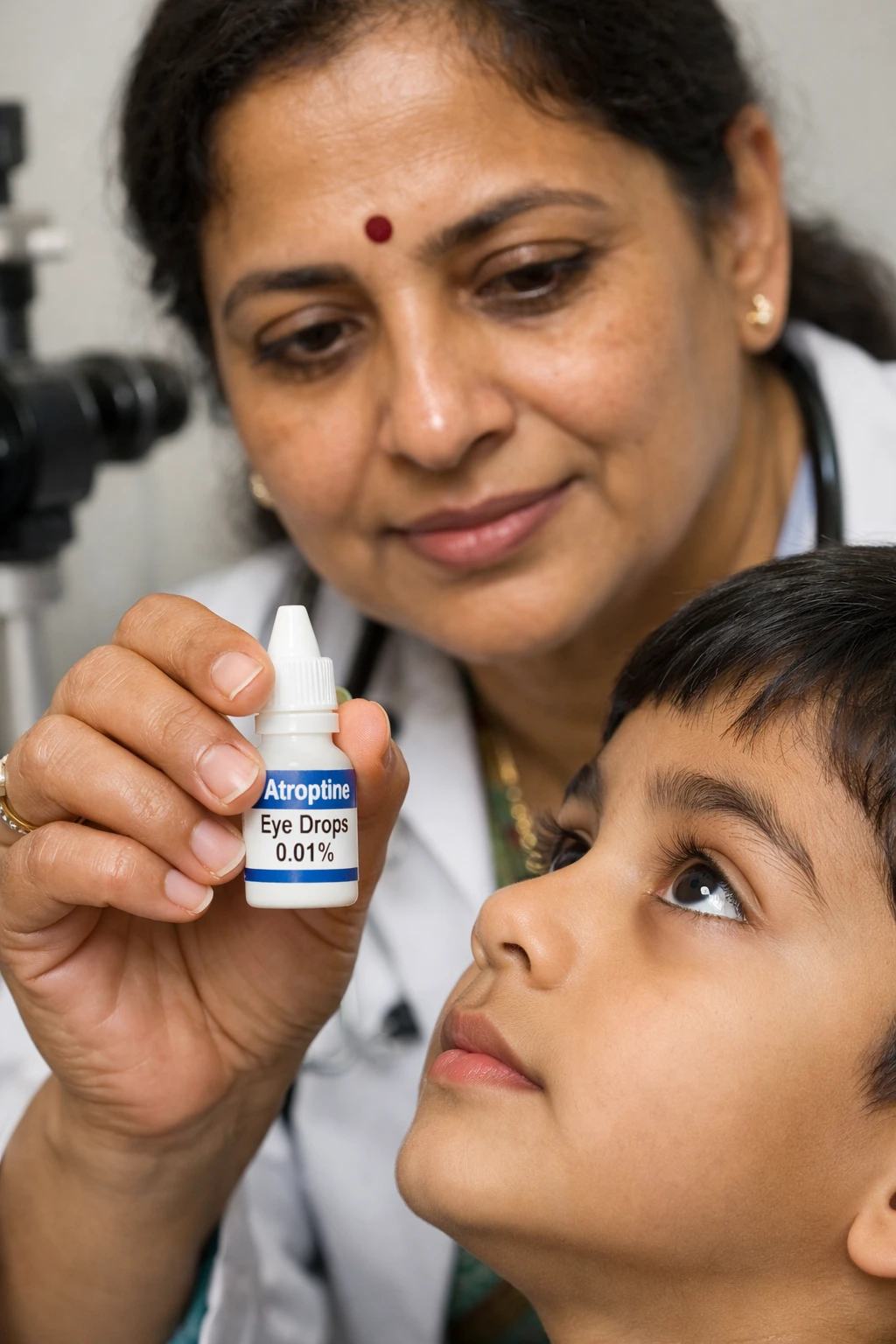
Low-dose atropine drops may help slow the progression of myopia.
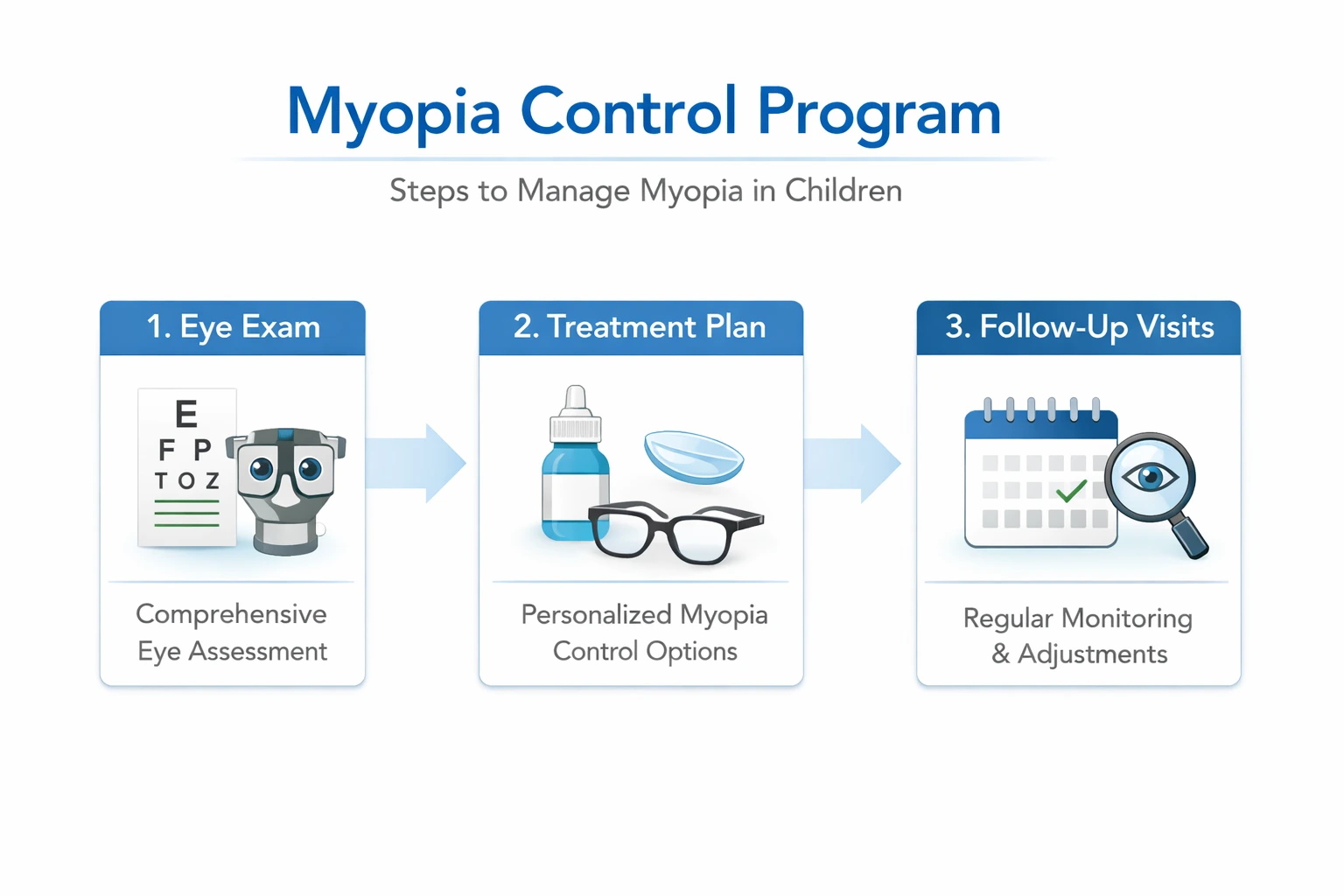
Myopia control programs include evaluation, treatment, and regular monitoring.
The program at Samyak Drishti typically involves:
Regular follow-ups allow doctors to adjust the treatment plan if required.
The cost of myopia management depends on:
During consultation, our doctors will explain the most suitable option for your child.
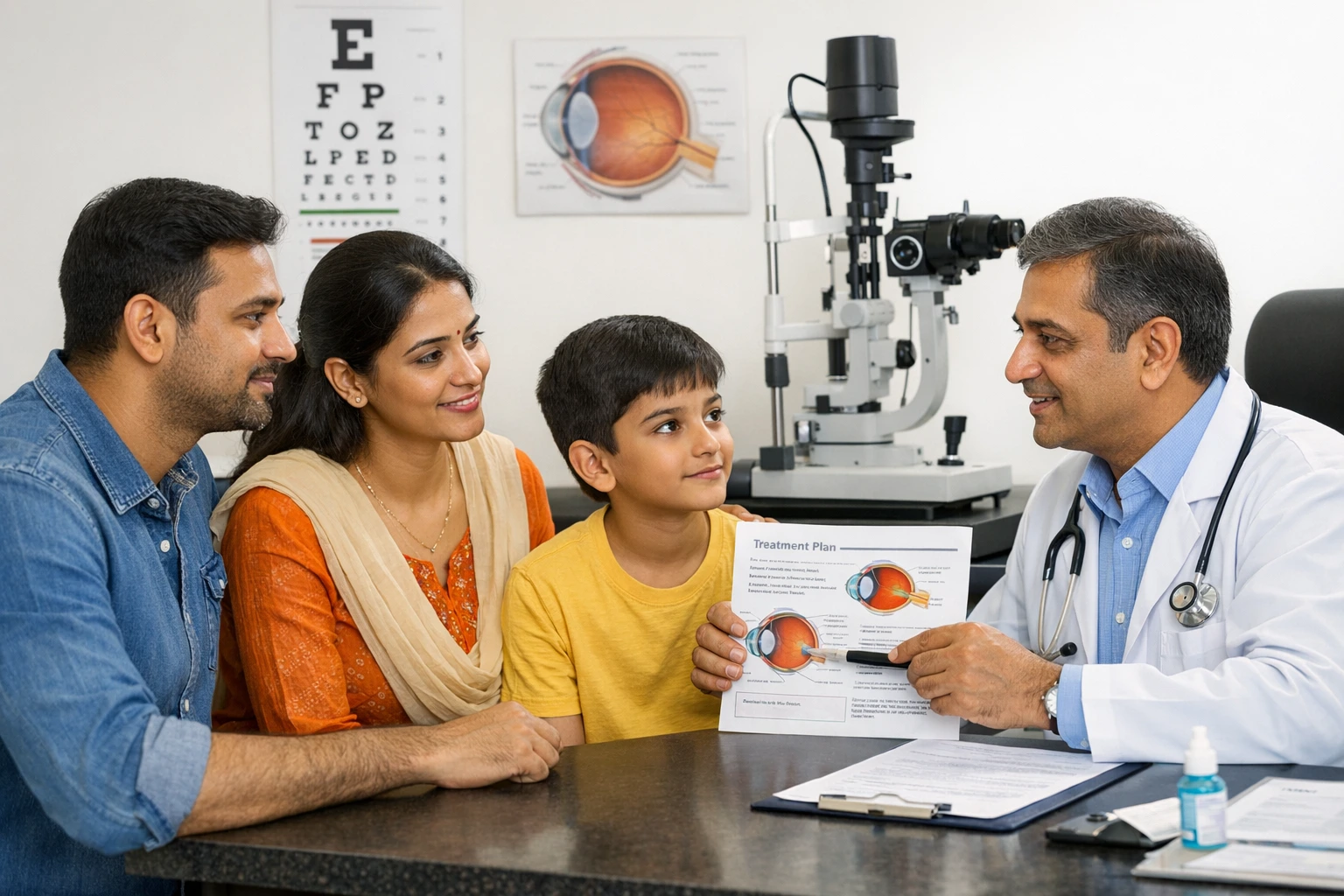
Treatment plans are customized depending on the child’s eye condition.
Parents trust Samyak Drishti Eye Hospital because we offer:
Our team focuses on long-term vision protection for children.
Myopia control at Samyak Drishti Eye Hospital focuses on slowing the progression of increasing eye power in children through scientifically proven treatment approaches. We aim to protect children from developing high myopia and related eye health complications later in life.
Diwakar Rao is an experienced optometrist with over 20 years of clinical experience in paediatric vision care, myopia management. He also specializes in orthokeratology lens fitting and Vision Therapy
Myopia, also called near-sightedness, is a condition where children can see nearby objects clearly but distant objects appear blurry. It usually develops during school age when the eye grows longer than normal.
Myopia control treatments may include:
Clinical studies show that specialized myopia control lenses can slow the progression of eye power compared to standard spectacle lenses.
Excessive screen time and prolonged near work can contribute to the development and progression of myopia in children. When children spend long hours focusing on close objects and have limited outdoor exposure, the risk of increasing eye power may become higher.
Experts recommend children spend at least 2 hours outdoors daily, as natural daylight may help reduce the risk of developing myopia.
High myopia can increase the risk of conditions such as retinal detachment, glaucoma, and myopic maculopathy, which is why controlling myopia progression early is important.
While myopia cannot be reversed, treatments such as myopia control lenses, orthokeratology lenses, and low-dose atropine drops can help slow the progression of eye power in children when started early.
Myopia cannot be completely reversed naturally once it develops. However, increasing outdoor activity, reducing prolonged screen time, and following proper eye care habits may help reduce the risk of rapid myopia progression. Medical treatments such as myopia control lenses or atropine drops are often recommended to slow progression.
Signs that myopia may be worsening include frequent changes in glasses prescription, squinting while looking at distant objects, sitting very close to screens, or difficulty seeing the classroom board. Regular eye examinations are important to monitor changes in eye power and detect progression early.
If myopia continues to progress without proper management, it can lead to high myopia in adulthood. High myopia increases the risk of serious eye conditions such as retinal detachment, glaucoma, myopic maculopathy, and early cataracts.
Yes, specially designed contact lenses such as orthokeratology (Ortho-K) lenses or dual-focus soft contact lenses can be used in children under professional supervision. These lenses are designed to slow myopia progression while correcting vision.
Myopia control treatments are usually recommended during the growing years of childhood and adolescence, when eye power tends to increase the most. Once eye growth stabilizes in the late teenage years, treatment may no longer be required.
Children with myopia should generally undergo eye examinations every 6 to 12 months, depending on how quickly their eye power is changing. Regular monitoring helps doctors adjust treatment plans and slow myopia progression effectively.
If your child’s glasses power is increasing every year, early intervention can help protect their future vision.
Schedule a myopia evaluation at Samyak Drishti Eye Hospital in South Bangalore today.